Skip to content

How AI Is Changing Online Shopping and Coupon Hunting in 2026

If you have shopped online at all this year, you have probably noticed something feels different. You are not just typing a product name into a search bar and scrolling through ten pages of results anymore. More people are asking a chatbot what to buy, letting a browser extension test coupon codes for them, or handing off the entire checkout to an AI agent while they do something else entirely.

This shift did not happen overnight, but 2026 is the year it became much harder to ignore. AI is increasingly influencing how shoppers discover products, compare prices, find deals, and make purchasing decisions, while coupon hunting is becoming more automated through browser extensions and AI-powered deal tools.

In this guide, we will walk through what is actually changing, what it means for everyday shoppers who just want a better deal, and how to make the most of these new tools without losing control over your own wallet.

 

The Rise of AI Shopping Agents in 2026

The clearest change in online shopping this year is how many people start their research inside an AI chat window instead of a search engine. Rather than typing a keyword and clicking through listings, shoppers are describing what they need in plain language, such as asking for wireless headphones that work well at the gym, or requesting the best current deal on a specific laptop.

Multiple 2026 studies indicate that AI is already becoming part of the online shopping journey. Adobe found that 39% of consumers surveyed had already used AI for online shopping, while AI-referred traffic to U.S. retail websites increased 393% year over year in Q1 2026. Consumers are increasingly using AI to research products, compare features, summarize reviews, evaluate prices, and discover relevant deals. While fully autonomous purchasing remains relatively uncommon, the growing use of AI throughout the shopping journey shows that AI-assisted commerce is moving beyond early adopters.

From Search Boxes to Conversations

The old shopping journey looked something like this: search, click, compare a few tabs, read some reviews, maybe abandon the cart, and come back later. It put nearly all of the work on the shopper.

AI shopping assistants compress that into a conversation. You describe a need or a budget, the assistant pulls together options, explains trade-offs, and in some cases can complete the purchase itself. For product categories that are genuinely confusing, like choosing between dozens of similar blenders or monitors, this kind of guided comparison can save real time.

Zero-Click and Agentic Checkout

“Zero-click shopping” is one of the phrases you will keep hearing in 2026. The idea is that a shopper never needs to visit a website or click a single link. Instead, they set a goal, such as reordering coffee pods when supplies run low or picking up a specific style of running shoe once a current pair wears out, and an AI agent monitors conditions and acts when it makes sense.

This is still an emerging behavior rather than the default way most people shop. Surveys show that while 51% of U.S. shoppers are willing to let AI handle the entire shopping process and many say they trust a personal AI agent to help choose products, only about 5–11% have actually allowed an agent to complete a transaction so far. Trust is building gradually, not instantly.

Why 2026 Feels Like a Turning Point

People have been predicting an “AI shopping revolution” for years, so it is fair to ask why this year feels different from the last few. Part of the answer is simple usage volume. Analysts studying chatbot activity have found that a meaningful share of daily conversations on major AI platforms are now shopping related, from questions about specific products to requests to compare prices between two options. Even a small percentage of billions of daily conversations adds up to tens of millions of shopping-related queries every single day.

The other part of the answer is infrastructure. Until recently, AI assistants could recommend products and guide shoppers through research, but completing a purchase on a shopper’s behalf required additional systems for authentication, payment authorization, and security. That gap began closing with the launch of Mastercard Agent Pay and Visa Intelligent Commerce in 2025, with both networks continuing to expand their agentic-commerce capabilities in 2026. At the same time, major technology and retail platforms are introducing experiences that allow shoppers to discover products, build carts, and, in some cases, complete purchases directly within AI-powered environments rather than being sent to a traditional product page first. Early results are mixed, however: AI-driven retail traffic is growing rapidly, while retailers are still working out how to balance easier AI-assisted purchasing with conversion, customer relationships, loyalty, and control over transaction data.

It is worth noting that adoption has not been perfectly smooth. Some large retailers have been candid about the fact that AI shopping agents still fall short of a fully satisfying customer experience in many cases, whether that is misunderstanding a request, recommending an out-of-stock item, or missing store-specific promotions. In other words, 2026 is a genuine inflection point, but it is an early one, not a finished product.

How AI Agents Are Reshaping Coupon Hunting

Coupon hunting used to mean opening a handful of tabs, copying codes from different deal sites, and hoping one of them still worked at checkout. That manual, trial-and-error process is exactly the kind of repetitive task AI is well suited to take over.

Automatic Coupon Testing at Checkout

Browser extensions have offered automatic coupon testing for years, but the newer generation of tools is noticeably smarter about it. Instead of blasting every code in a database at the checkout page, current tools try to match offers to what is actually in your cart, your order total, and whether you appear to be a new or returning customer, which cuts down on wasted attempts and expired codes.

Newer coupon tools are increasingly moving beyond static lists of promo codes by using automated testing and real-time shopper feedback to identify offers that are more likely to work at checkout. For example, SimplyCodes reported an 81.5% coupon-code success rate in March 2026 testing across 33,235 merchants, meaning that roughly four out of five codes tested successfully when an applicable discount was available. The company also maintains coverage across more than 500,000 online stores, although coverage and success rates can vary significantly by retailer. This approach helps address one of the biggest frustrations with traditional coupon hunting: finding codes that appear promising but are expired, restricted, or simply no longer work.

Price Tracking and Price History Tools

Coupon hunting and price tracking have become closely linked. Because large retailers change prices constantly, sometimes many times within a single day, a coupon code alone does not tell you whether you are actually getting a good deal. Price history tools solve that by showing how a product’s price has moved over weeks or months, so you can tell whether a “sale” price is meaningfully lower than normal or just a marketing label.

Here is a general look at the types of tools shoppers are combining in 2026:

Tool type What it does Best used for
Coupon-testing extensions Automatically finds and tries promo codes at checkout Getting a percentage or dollar discount at the final step
Price history trackers Shows how a product’s price has changed over time Deciding whether now is actually a good time to buy
Cashback platforms Returns a percentage of your purchase after checkout Stacking extra savings on top of a coupon or sale price
AI shopping assistants Compares products, summarizes reviews, and can complete purchases Research-heavy purchases like electronics or appliances

None of these tools are new inventions in 2026, but AI has made each of them faster and more accurate, and shoppers are increasingly using several together rather than picking just one.

Cashback and Coupon Stacking

Another habit that has become more common this year is stacking multiple types of savings on a single purchase. A typical stacked purchase might combine a store-wide coupon code, a cashback rate through a browser extension, and a rewards credit card offering extra points on that specific retailer. AI-powered tools make this easier to manage because they can automatically flag which combinations are allowed, since many retailers restrict stacking certain promotions together.

This is also where coupon and deal websites still play an important role. A well-maintained coupon site can clearly separate exclusive codes, store-wide sales, and category-specific promotions, which gives shoppers a cleaner starting point before an automated tool takes over at checkout.

Voice and Mobile Deal Hunting

Coupon hunting is also moving further into voice assistants and mobile apps. Instead of opening a laptop to search for a discount code, more shoppers are asking a voice assistant whether a product currently has any active promotions, or checking a retailer’s app for a personalized offer generated based on their past purchases. This mobile-first, voice-friendly behavior is pushing coupon and deal sites to make sure their content is easy to read on a small screen and easy for an AI system to summarize accurately in a short spoken answer.


The New Payment Rails Behind AI Shopping

One of the less visible but more important developments in 2026 is happening at the payment infrastructure level. For an AI agent to actually complete a purchase on your behalf, card networks and payment companies needed a way to verify that the agent is authorized, limit what it can spend, and let a shopper revoke that authorization instantly if something goes wrong.

Mastercard and Visa each rolled out frameworks designed specifically for this problem: Mastercard Agent Pay launched in 2025 and expanded in 2026 with Agent Pay for Machines, while Visa Intelligent Commerce also debuted in 2025 and added major partnerships, including with OpenAI, in mid-2026. Mastercard’s agent-focused program ties a tokenized card credential to a specific AI agent, a defined merchant scope, and a consent policy, so the agent never actually holds your raw card number. Visa has taken a similar approach with its own agent-verification protocol, which lets merchants confirm that a request is coming from a legitimate, authorized agent rather than a bot pretending to be one.

Several major retail and technology companies have also worked together on shared standards so that agentic purchases behave consistently across different platforms and card networks, rather than every company building its own incompatible system. It is a genuinely fast-moving space, and the specific standards in place may continue to shift, so it is worth checking for the latest details before assuming any one system is the final word.

For everyday shoppers, the practical takeaway is this: if you do choose to let an AI agent shop for you, look for the ability to set clear spending limits and to revoke access at any time from your card issuer’s app. Those consumer protections are becoming a standard feature, not an afterthought.

A Closer Look at the Tools Shoppers Are Actually Using

It helps to ground all of this in specifics rather than just discussing trends in the abstract. Here is a general overview of the categories of tools that have become popular in 2026, without treating any single product as the definitive best option, since the right fit depends on which retailers you shop most and what you are trying to save on.

  • Multi-retailer coupon and cashback extensions. These browser add-ons work across thousands of online stores, automatically searching for and testing codes at checkout while also tracking cashback where available. They tend to be the easiest entry point for someone who has never used an automated deal-finding tool before.
  • Dedicated price history trackers. These tools focus specifically on showing how a product’s price has moved over time, which is especially useful on marketplaces where prices can change several times within a single day.
  • AI-native coupon assistants. A newer wave of tools goes a step further by attempting to match a specific offer to what is actually in your cart in real time, rather than blindly trying a long list of codes, which reduces failed attempts and speeds up checkout.
  • Card-issuer shopping tools. Some credit card companies now offer their own built-in coupon and price comparison features, which can be a convenient option if you already use that card regularly, since no separate account or extension is required.

Whichever category you choose from, the general advice stays the same: pick one or two tools you trust, understand what data they collect, and avoid installing several overlapping extensions that could conflict with each other during checkout.

What This Means for Everyday Shoppers

All of this technology is only useful if it actually makes shopping easier and cheaper for the person using it. Here is what it means in practical terms.

  • Less manual searching for codes. A well-built browser extension can test coupon codes for you automatically, saving the old routine of opening multiple tabs before checkout.
  • Better context on whether a deal is real. Price history tools help you see whether a discount is meaningful or just a temporary markup followed by a “sale.”
  • Faster comparison shopping. Asking an AI assistant to compare two or three specific products can be quicker than reading through several long review articles yourself.
  • More decisions happening with less friction. This can be a benefit, but it also means it is easier to make an impulse purchase without pausing to think it through.
  • New privacy and data questions. AI shopping tools often need access to your browsing behavior or purchase history to work well, so it is worth understanding what each tool collects.

What This Means for Retailers and Coupon Sites

Retailers and deal websites are adjusting quickly, and the changes go beyond just adding a chatbot to a homepage.

  • Content needs to answer questions directly. When an AI assistant summarizes a coupon site to answer a shopper’s question, clear, well-organized information about current offers, expiration dates, and store details tends to get referenced more often than vague or cluttered pages.
  • Structured data matters more. Coupon and store pages that use clean formatting, accurate discount values, and up-to-date codes are easier for both search engines and AI systems to read and trust.
  • Verification is becoming a differentiator. With so many outdated codes floating around online, coupon sites that clearly show when a code was last verified or last used tend to build more trust with visitors.
  • Personalization is expanding beyond email. Retailers are increasingly using behavioral and contextual data to tailor offers across channels in real time, rather than sending the same generic discount to everyone.

Risks and Things to Watch Out For

None of this is without downsides, and it is worth being clear-eyed about the risks rather than treating AI shopping tools as a guaranteed win.

Not Every AI Recommendation Is Unbiased

Some AI shopping assistants are built or sponsored by companies with commercial relationships to certain retailers or brands. That does not necessarily make the recommendations bad, but it is worth treating an AI’s suggestion the same way you would treat a human salesperson’s suggestion: helpful, but worth double-checking.

Automated Checkout Reduces the Pause Before Buying

Part of what keeps spending in check for a lot of people is the natural pause created by manually going through checkout. When that friction disappears, it becomes easier to spend more than planned. If you use an AI shopping agent regularly, setting a firm spending limit through your card issuer is a reasonable safeguard.

Fraud Patterns Are Still Catching Up

Because an AI agent does not behave exactly like a human shopper, some of the usual signals that banks and retailers use to catch fraud do not apply in the same way. Payment networks are actively building new verification layers to address this, but industry-wide dispute resolution and liability frameworks for agentic purchases are still being finalized, so keeping an eye on your statements is still a good habit.

Not Every Coupon Extension Is Trustworthy

Browser extensions that promise automatic coupons need fairly broad access to see what you are buying and where. Before installing one, it is worth checking reviews, understanding what data it collects, and avoiding extensions that ask for permissions that seem unrelated to finding discounts.

How to Make AI Work For You When Hunting Deals

You do not need to overhaul how you shop to benefit from these tools. A few practical habits go a long way.

  1. Install one reputable coupon-testing extension rather than several competing ones, since running multiple similar extensions at once can slow down checkout or cause conflicts.
  2. Pair it with a price history tool for bigger purchases like electronics or furniture, so you can confirm a sale price is actually a good one.
  3. Use an AI assistant for comparison, not just recommendation. Ask it to explain trade-offs between two specific products rather than just naming a winner.
  4. Set spending limits if you decide to let an AI agent complete purchases on your behalf, and know how to revoke its access quickly.
  5. Check a coupon site’s “last verified” or “last used” details before assuming a code will work, since even automated tools occasionally surface expired offers.
  6. Keep an eye on your statements a little more closely than usual while agentic shopping tools are still relatively new.


The Future: What’s Next Beyond 2026

Industry analysts expect AI’s role in shopping to keep growing over the next several years, though estimates for exactly how much revenue will flow through AI-driven and agentic channels vary widely depending on which research firm you ask. What most forecasts agree on directionally is that agentic and AI-assisted shopping is moving from a novelty into a standard part of the retail landscape, not a passing trend.

For coupon hunters specifically, that likely means even tighter integration between price tracking, automatic coupon application, and personalized deal alerts, all working together in the background rather than as separate tools you have to manage one by one. Coupon and deal websites that adapt by offering clear, verified, well-organized information are well positioned to remain useful in a world where both humans and AI agents are reading their pages.

It is also likely that shoppers will end up relying on a small handful of trusted tools rather than constantly switching between new apps and extensions as they launch. Just as most people eventually settled on one or two preferred retailers for most of their online purchases, the same pattern is likely to play out with AI shopping and coupon tools, once the current wave of experimentation and competition settles down.

Frequently Asked Questions

Is it safe to let an AI agent make purchases for me?

Major card networks have introduced verification systems designed to make agentic purchases safer, including the ability to set spending limits and revoke an agent’s access at any time. That said, this technology is still relatively new, so it is a good idea to start with smaller purchases, review your statements regularly, and only authorize agents through reputable, well-known platforms.

Do AI coupon extensions actually save money, or are the discounts exaggerated?

Results vary by retailer and by extension. These tools generally save you the time of manually searching for and testing codes, and many will apply a working discount when one is available. However, not every attempt results in a discount, since some retailers limit or block automated coupon testing at checkout, and some codes may already be expired.

Will AI shopping assistants replace traditional online shopping?

Not entirely, at least not yet. Many shoppers use AI assistants for research, comparison, and reordering routine items, while still browsing traditional retail sites directly for other purchases. The two approaches are increasingly used together rather than one fully replacing the other.

How do I know if a coupon code found by an AI tool is still valid?

Look for tools and coupon websites that show when a code was last verified or last successfully used. Codes that were tested very recently are generally more reliable than ones sitting on a static list that has not been updated in a while.

What information do AI shopping and coupon tools typically collect?

This varies by provider, but many tools need some visibility into your browsing activity on retail sites in order to detect what you are buying and apply relevant offers. It is worth reading a tool’s privacy policy before installing it, and avoiding extensions that request permissions unrelated to their core function.

Are AI shopping recommendations biased toward certain brands or retailers?

Some AI shopping tools have commercial partnerships with specific retailers or receive compensation for driving sales, similar to how some coupon and review sites operate. This does not automatically make a recommendation unreliable, but it is reasonable to compare an AI’s suggestion against independent reviews before making a larger purchase.

Final Thoughts

AI has not replaced the fundamentals of smart shopping. Comparing prices, checking whether a deal is genuine, and reading the fine print still matter just as much as they always have. What has changed is how much of that work can now happen automatically in the background, freeing up time for the parts of shopping that still benefit from a human decision.

The shoppers getting the most out of 2026’s tools are not the ones blindly trusting every AI suggestion. They are the ones using these tools as a starting point, verifying the details that matter, and staying in control of the final decision, whether that decision is made by them or, increasingly, by an agent acting on their behalf.
Bowflex vs NordicTrack: Which Home Gym Brand Is Actually Worth Your Money?

If you have spent any time shopping for home fitness equipment, you have almost certainly landed on a page comparing Bowflex and NordicTrack. These two names have dominated the home gym conversation for decades, and for good reason. Both brands offer a wide lineup of treadmills, ellipticals, bikes, and strength equipment, and both have loyal fans who swear by their gear.

But the two brands are not the same company chasing the same goals, and a lot has changed recently. Bowflex went through a bankruptcy and change of ownership in 2024, and NordicTrack has continued leaning hard into its iFIT ecosystem. If you are trying to decide where to put your money in 2026, you need more than a spec sheet comparison. You need to understand who actually owns these brands now, how their equipment differs in real use, and which one fits your goals, space, and budget.

This guide breaks down everything you need to know, from company history and current ownership to strength training philosophy, cardio equipment, smart features, pricing, and long term reliability.


A Quick Look: Bowflex vs NordicTrack at a Glance

Category Bowflex NordicTrack
Current owner Johnson Health Tech (acquired in 2024 after Chapter 11 bankruptcy) iFIT Health and Fitness (parent company of ProForm and Freemotion)
Primary strength Strength training and compact home gyms Cardio machines with immersive coaching content
Signature product SelectTech adjustable dumbbells Incline trainers and studio-style treadmills
App ecosystem JRNY iFIT
Best for Strength focused home gyms and space saving equipment Cardio enthusiasts who want interactive, trainer led workouts
Price range Generally more affordable, especially for strength gear Wide range, with premium cardio machines at higher price points

Company Background: What Happened to Bowflex, and Where Does NordicTrack Stand Today?

Before comparing treadmills and dumbbells, it helps to understand the business story behind each brand, because it directly affects product support, warranties, and long term reliability.

Bowflex’s Bankruptcy and New Ownership

Bowflex is now owned by Johnson Health Tech, which acquired the brand’s assets through a Chapter 11 bankruptcy sale in 2024 for approximately $37.5 million. Since the acquisition, Bowflex has continued operating under its new parent company.

NordicTrack’s Position Under iFIT

NordicTrack has had a more stable ownership path. It operates under iFIT Health and Fitness, which also owns ProForm and Freemotion. NordicTrack’s strategy has centered heavily on its iFIT content platform, which pairs equipment with live and on demand trainer led classes filmed around the world. This subscription first approach has become the backbone of nearly every NordicTrack product, from budget treadmills to premium studio bikes.

NordicTrack has not faced the same financial turbulence as Bowflex in recent years, which gives it an edge in terms of predictability for buyers who want long term software support and consistent product availability.

Strength Training: Where Bowflex Has the Edge

If your main goal is building strength at home, Bowflex is generally the stronger choice, and it is not particularly close.

Bowflex SelectTech Dumbbells and Adjustable Kettlebells

The SelectTech line remains one of the most popular adjustable dumbbell systems on the market. Instead of storing a full rack of individual dumbbells, you get one compact pair that adjusts in weight with a simple dial, typically ranging from 5 to 52.5 pounds per dumbbell depending on the model. For apartment dwellers or anyone short on space, this is a genuinely useful design.

Bowflex also offers:

  • Adjustable kettlebells that replace multiple traditional kettlebells
  • Compact home gym systems like the Bowflex PR1000 and Xtreme series, which use resistance rods instead of free weights
  • Adjustable weight benches designed to pair with SelectTech dumbbells
  • The Bowflex Max Trainer, a hybrid stepper and elliptical that blends cardio with strength intervals
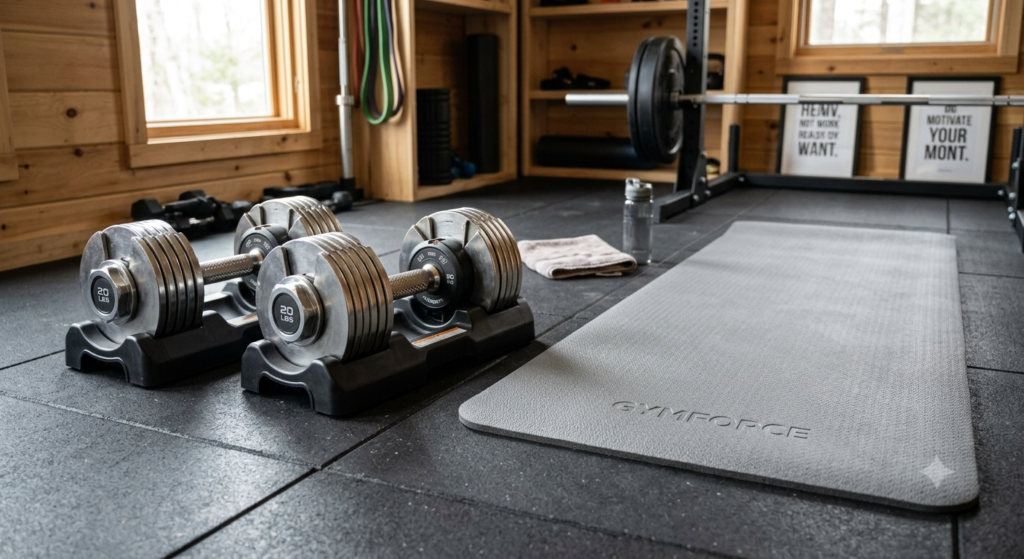
Bowflex SelectTech dumbbells remain a popular pick for space saving strength training.

NordicTrack’s Strength Offerings

NordicTrack does sell strength equipment, including the NordicTrack Fusion CST, which combines cardio and functional strength training in one machine, along with select dumbbell and kettlebell products. However, strength training has never been the core identity of the brand. Its catalog is noticeably thinner here compared to its cardio lineup, and most of its strength focused machines lean toward functional training rather than traditional free weight lifting.

If building muscle with dumbbells, benches, and compact home gym setups is your priority, Bowflex is the more natural fit.

Cardio Equipment: Where NordicTrack Pulls Ahead

Flip the script to cardio, and NordicTrack becomes the stronger contender.

NordicTrack Treadmills, Bikes, and Ellipticals

NordicTrack’s treadmill lineup, including the Commercial series and its incline trainers, is widely regarded as some of the best in the connected fitness space. Many models feature large touchscreens, automatic incline and decline adjustments that sync with instructor led routes, and studio quality build. NordicTrack’s incline trainers in particular are known for offering true decline settings alongside steep inclines, which is not something every competitor offers.

The brand’s rowing machines, exercise bikes, and ellipticals follow the same formula, combining solid mechanical hardware with the iFIT software layer that adjusts resistance and incline automatically based on the trainer’s on screen workout.

Bowflex Cardio Machines

Bowflex is not absent from the cardio category. Its Max Trainer line has a dedicated fan base for its compact footprint and efficient interval based workouts, and Bowflex also offers treadmills and exercise bikes through its Schwinn affiliated lineup. That said, the overall breadth and premium tier options are narrower than what NordicTrack offers, especially at the higher end of the treadmill and incline trainer market.

NordicTrack’s treadmill lineup is known for large touchscreens and automatic trainer controlled incline.

Smart Features and App Ecosystems: JRNY vs iFIT

Both brands have leaned into connected fitness, but their approaches differ in scope and depth.

Bowflex JRNY

JRNY is Bowflex’s adaptive fitness platform. It builds workout plans that adjust based on your performance and offers guided coaching on compatible equipment. It is generally considered simpler and less content heavy than iFIT, with a narrower workout library, but it is also more budget friendly and easier to navigate for beginners who do not want an overwhelming number of options.

NordicTrack iFIT

iFIT is a much larger operation, offering thousands of studio and outdoor filmed workouts led by professional trainers, along with global route simulations where your treadmill incline or bike resistance automatically matches the terrain in the video. As of 2026, iFIT offers tiered membership plans, generally referred to as Train and Pro, with the Pro tier built for equipment with integrated touchscreens and priced around 39 dollars per month. Existing members are typically grandfathered into their current pricing when new tiers roll out, though this can change, so it is worth checking iFIT’s official membership page for current terms before buying.

The tradeoff is straightforward. iFIT delivers a more immersive, content rich experience, but it comes at a higher recurring cost and, in many cases, is required to unlock the full functionality of the equipment you already paid for. JRNY tends to be less demanding on your wallet but also less feature dense.

Pricing Comparison: What You Can Expect to Pay

Exact pricing shifts often with sales events, financing promotions, and seasonal discounts, so treat the figures below as general ranges rather than fixed numbers. Always check current pricing directly on each brand’s website before making a decision.

Equipment Type Bowflex Price Range NordicTrack Price Range
Adjustable dumbbells Roughly 300 to 700 dollars per pair Limited selection, similar range where available
Compact home gym system Roughly 400 to 1,800 dollars Not a core category
Treadmill Roughly 800 to 2,000 dollars Roughly 700 to 4,000 dollars, with premium incline trainers at the top end
Exercise bike Roughly 700 to 1,600 dollars Roughly 600 to 2,500 dollars
Monthly app subscription JRNY, typically lower monthly cost iFIT, typically around 39 dollars per month for the Pro tier

Generally speaking, Bowflex tends to be the more budget-conscious option, particularly for strength equipment, while NordicTrack’s premium cardio machines and iFIT subscription can add up to a noticeably higher total cost of ownership over a few years. Prices change frequently, so it is worth checking the current pricing on the official website before making a decision.

Build Quality and Durability

Both brands manufacture equipment that is generally considered durable for home use, though neither is typically built to the same commercial-grade standard as equipment found in professional gyms.

Johnson Health Tech has extensive experience manufacturing both commercial and residential fitness equipment. While it is still too early to assess the long-term impact of its acquisition of Bowflex, many buyers view the company’s manufacturing expertise as a positive for the brand’s future.

NordicTrack’s higher-end machines, particularly its Commercial Series treadmills and bikes, are generally well regarded for their sturdy frames and reliable motor performance, which is one reason they command higher prices. Entry-level NordicTrack models, like entry-level Bowflex equipment, may show more wear over time with heavy daily use.

As with any home fitness equipment, it’s worth reviewing the warranty terms and recent customer feedback for the specific model you’re considering, as build quality and long-term durability can vary across product lines.

Space and Design Considerations

If you live in a smaller home or apartment, this is an important factor.

  • Bowflex generally wins on space efficiency, particularly with its adjustable dumbbells and compact resistance rod home gyms, which are designed specifically to replace bulky equipment.
  • NordicTrack equipment, especially its treadmills and incline trainers, tends to have a larger footprint, and some models are quite heavy, which is worth factoring in if you plan to move the equipment often or live in a walk up apartment.
Space saving equipment like adjustable dumbbells is a strong option for smaller homes.

Which One Should You Choose?

There is no single right answer here. The better brand depends on what you are actually trying to accomplish.

Choose Bowflex If You:

  • Prioritize strength training over cardio
  • Have limited space and want compact, multi function equipment
  • Want a more budget friendly entry point into home fitness
  • Prefer a simpler app experience without a heavy content library

Choose NordicTrack If You:

  • Prioritize cardio training, especially running, walking, or cycling
  • Want an immersive, trainer led workout experience with global scenery
  • Are willing to invest in a monthly subscription for a deeper content library
  • Want access to some of the most advanced treadmill incline technology available for home use

Some households end up with a mix of both, using Bowflex dumbbells or a compact home gym for strength days alongside a NordicTrack treadmill or bike for cardio sessions. That combination is not unusual and can make sense if your budget allows for it.

Final Thoughts

Bowflex and NordicTrack are not really direct competitors trying to do the same thing. Bowflex has built its identity around strength training and space saving design, and its recent acquisition by Johnson Health Tech appears to have stabilized the brand’s future after a rocky 2024. NordicTrack has doubled down on cardio equipment paired with its iFIT content platform, offering an experience that feels closer to a boutique fitness studio than a basic home gym.

Before buying from either brand, it is worth checking recent customer reviews for the specific model you are considering, confirming current warranty terms, and factoring in any required subscription costs into your total budget. Fitness equipment is a meaningful investment, and taking a few extra minutes to compare current pricing and specs directly on each brand’s website will help you make a decision that fits your goals and your space.

Frequently Asked Questions

Is Bowflex still in business in 2026?

Yes. Bowflex filed for Chapter 11 bankruptcy in March 2024, but its assets were acquired by Johnson Health Tech later that year. The brand continues to manufacture and sell products, including its SelectTech dumbbells and home gym systems, under its new ownership.

Is NordicTrack owned by the same company as Bowflex?

No. NordicTrack is owned by iFIT Health and Fitness, which also owns ProForm and Freemotion. Bowflex is a separate brand, now owned by Johnson Health Tech, which also owns Matrix Fitness, Horizon Fitness, and Vision Fitness.

Do I have to pay for a subscription to use Bowflex or NordicTrack equipment?

In most cases, you can use both brands’ equipment in a basic manual mode without an active subscription. However, the interactive, trainer led features that make these machines stand out, such as automatic incline adjustments and guided coaching, typically require an active JRNY or iFIT subscription.

Which brand is better for building strength?

Bowflex is generally considered the stronger option for strength training, particularly because of its SelectTech adjustable dumbbells and compact home gym systems. NordicTrack’s strength offerings are more limited and tend to focus on functional training rather than traditional free weight lifting.

Which brand is better for cardio and running?

NordicTrack is generally the stronger choice for cardio, especially for treadmill and incline training. Its Commercial series and incline trainers are widely regarded as some of the most advanced options available for home use.

Are Bowflex adjustable dumbbells safe to use?

Most Bowflex adjustable dumbbells are safe when used and maintained according to the manufacturer’s instructions. That said, a recall was issued in 2025 covering the SelectTech 552 and 1090 models sold between 2004 and 2025 due to a risk of weight plates detaching. If you own or are considering buying one of these models secondhand, check the official recall notice from the Consumer Product Safety Commission for details on eligibility and remedies.

Is it worth buying used Bowflex or NordicTrack equipment?

Buying used equipment can be a cost effective option, but it is worth verifying the model number against any active recalls, checking whether the warranty is transferable, and confirming that any required companion app or subscription is still fully supported for that model.

Can I use Bowflex or NordicTrack equipment without an internet connection?

Yes, many Bowflex and NordicTrack machines can operate in a basic manual mode without internet, but app features, interactive workouts, and some setup or console functions may still require Wi‑Fi depending on the model.

Best Home Gym Equipment Under $200 in 2026: A Practical Buyer’s Guide


Gym memberships keep climbing in price, and let’s be honest, most of us have skipped a session or two simply because the drive there felt like too much effort. That’s exactly why more people are turning their spare bedroom, garage corner, or even a slice of their living room into a personal workout space. The good news is that you don’t need a five figure budget or a converted warehouse to make it happen. With a little planning, you can put together a genuinely effective home gym for less than $200, and in many cases far less.

This guide walks through the best home gym equipment under $200 for 2026, why each piece earns its spot, and how to combine a few items into a setup that actually gets used instead of collecting dust in the closet. Whether you’re outfitting a first apartment, building a garage gym on a tight budget, or just looking to add a few versatile tools to what you already own, you’ll find practical, no nonsense picks below.

Why More People Are Building Home Gyms in 2026

Home fitness has moved well past the pandemic era treadmill boom. What’s changed is the mindset. People aren’t just avoiding crowded gyms anymore, they’re recognizing that a smaller, smarter setup can deliver most of the benefits of a full commercial gym without the monthly bill or the commute. Compact adjustable dumbbells, foldable benches, and space saving resistance tools have gotten noticeably better in the last couple of years, which means budget shoppers no longer have to settle for flimsy, low quality gear.

There’s also a practical financial angle. A single year of a mid range gym membership can easily cost more than a full home setup that lasts a decade with basic care. That math is a big part of why searches for affordable home workout equipment and budget strength training gear continue to trend upward year over year.

What to Look For When Shopping on a Budget

Not all inexpensive equipment is created equal. Before you add anything to your cart, keep these factors in mind:

  • Material quality: Look for coated steel, solid rubber, or reinforced nylon rather than thin plastic that cracks after a few months of use.
  • Versatility: A single piece of equipment that supports ten exercises is a better value than two pieces that each do one thing.
  • Footprint: If you’re working with a small apartment, foldable or stackable gear matters more than it might seem at first.
  • Weight capacity and adjustability: Make sure the equipment can grow with you as you get stronger, especially for resistance bands and adjustable dumbbells.
  • Warranty and return policy: Budget doesn’t have to mean disposable. Many reputable brands still offer one to two year warranties even on entry level products.

With those criteria in mind, here’s a rundown of the equipment that consistently delivers the most value for under $200.

1. Adjustable Dumbbells


If you can only buy one thing for your home gym, make it a pair of adjustable dumbbells. Entry level adjustable sets, the kind that top out around 25 to 50 pounds per hand, are commonly available under $200 and replace what would otherwise be a small rack of fixed weight dumbbells. That matters a lot if you live somewhere without a garage or basement to spare.

Modern adjustable dumbbells have come a long way from the clunky screw collar designs of a decade ago. Many current models use a dial or pin selection system that lets you change weight in seconds, which keeps your workout moving instead of stalling out mid set while you fiddle with plates.

Good for: chest presses, rows, shoulder presses, goblet squats, lunges, and dozens of other strength movements.

2. Resistance Bands Set


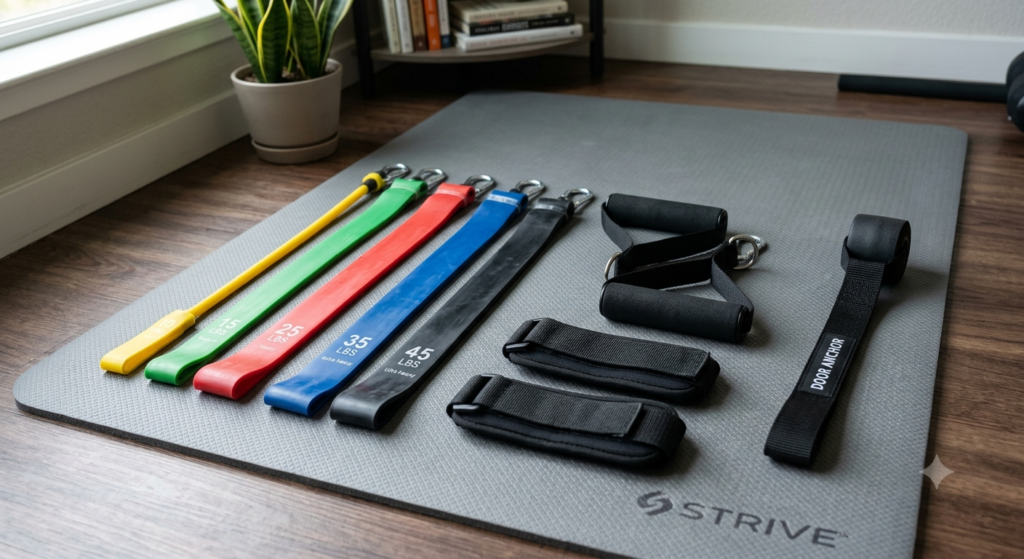
Resistance bands are one of the most underrated pieces of home gym equipment, and they routinely cost well under $50 for a full set with handles, ankle straps, and a door anchor. Unlike a fixed weight, bands provide variable resistance, meaning the tension increases the further you stretch them. Some people find this feels gentler on the joints compared to free weights, though as with any training tool, form and appropriate progression still matter most.

A quality band set typically includes several resistance levels, from light to heavy, so you can adjust the intensity as you get stronger. They also pack down small enough to toss in a suitcase, which makes them a favorite for anyone who travels often but still wants to keep up a routine.

Good for: banded squats, rows, lateral walks, shoulder work, and mobility or rehab focused movement patterns.

3. Kettlebells


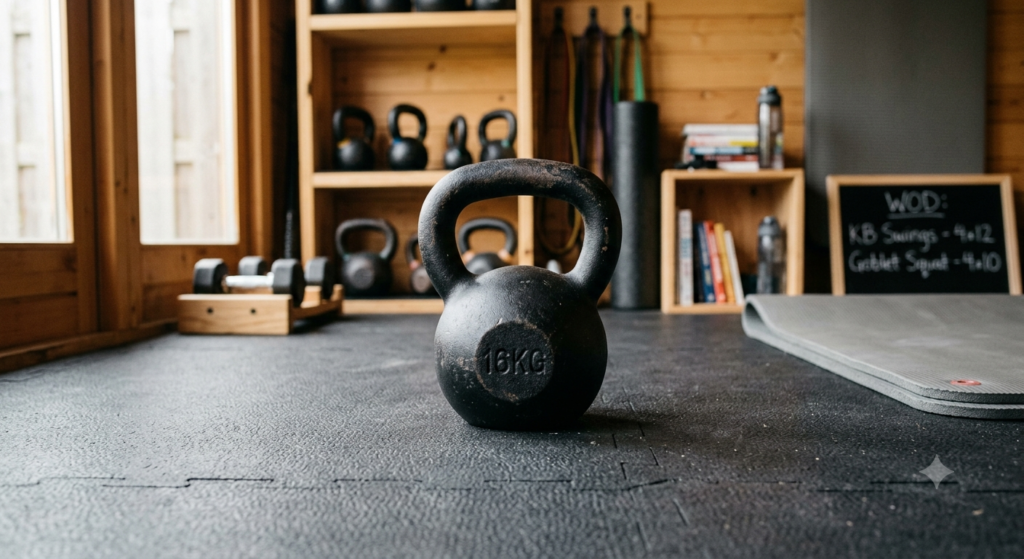
A single kettlebell in the 15 to 35 pound range can cost anywhere from $30 to $80 depending on the weight and brand, which leaves plenty of room in a $200 budget to grab two different weights. Kettlebells shine for full body, functional movements like swings, goblet squats, and Turkish get ups, and they take up almost no floor space compared to a barbell setup.

Because the weight is offset from the handle, kettlebell training also tends to challenge grip strength and core stability more than a standard dumbbell of the same weight, which some trainers consider a nice bonus for functional fitness.

Good for: swings, cleans, goblet squats, presses, and conditioning circuits.

4. Adjustable Weight Bench


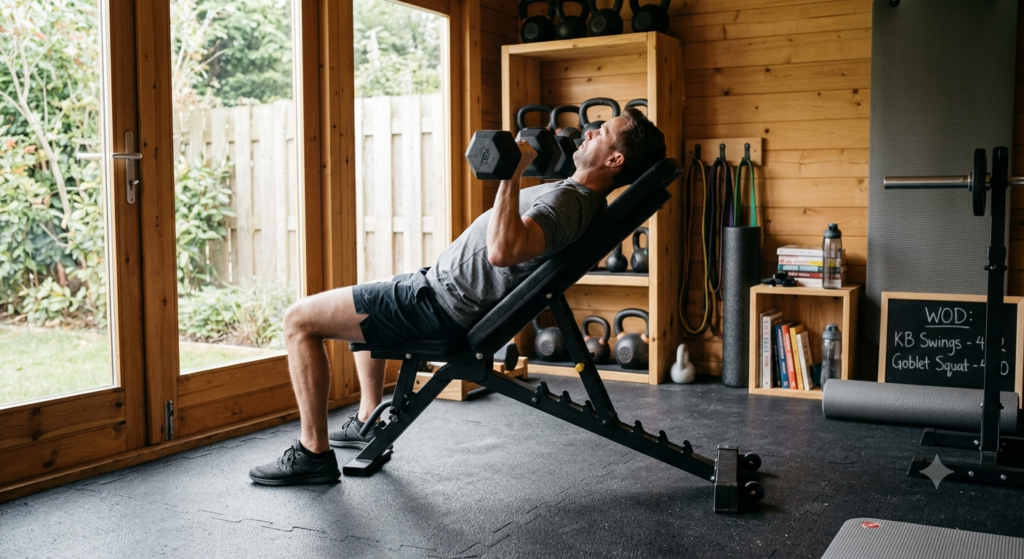
A flat or adjustable bench opens up a huge range of exercises that aren’t possible standing on the floor, from incline presses to step ups and seated shoulder work. Entry level flat benches can be found well under $100, while adjustable models with incline and decline settings generally land in the $120 to $200 range depending on weight capacity and build quality.

Look for a bench with a solid steel frame and a weight capacity that comfortably exceeds your body weight plus whatever you’re lifting, since this is one area where cutting corners on construction quality isn’t worth the savings.

Good for: bench press, incline dumbbell press, step ups, Bulgarian split squats, and seated core work.

5. Pull-Up Bar


A doorway mounted pull up bar is one of the best value additions you can make to a home gym, often priced between $20 and $60. It requires no permanent installation in most cases and gives you access to pull ups, chin ups, hanging leg raises, and even a few core exercises using just your body weight.

For anyone chasing upper body strength or working toward their first unassisted pull up, this is arguably one of the highest return on investment purchases on this entire list.

Good for: pull ups, chin ups, hanging knee raises, and passive shoulder stretching.

6. Jump Rope

It’s easy to overlook, but a good quality jump rope delivers a serious cardio workout for less than $30. Weighted or speed rope versions are common and let you dial in the training style you want, whether that’s steady state cardio or fast interval work.

Good for: cardio conditioning, coordination, and warm ups before strength sessions.

7. Suspension Trainer


Suspension trainers, the strap based systems that anchor to a door or beam, typically cost between $60 and $150. They use your own body weight as resistance and let you adjust the difficulty of nearly every movement just by changing your body angle. This makes them a strong option for people at very different fitness levels sharing the same equipment, such as a household with both a beginner and a more advanced lifter.

Good for: rows, presses, planks, lunges, and total body stability work.

8. Ab Wheel and Core Sliders

These two tools combined rarely cost more than $30 to $40 and target core strength in a way that’s genuinely different from crunches or planks. An ab wheel builds anti extension core strength, while sliders work well for mountain climbers, pikes, and lateral lunges on hard flooring.

Good for: core stability, anti rotation strength, and low impact conditioning.

9. Foam Roller

Not exactly a training tool, but a foam roller under $30 rounds out a home gym nicely by supporting recovery between sessions. Many people use foam rolling as part of a warm up or cool down routine, and some research suggests it may help with short term muscle soreness and mobility, though results vary from person to person.

10. Yoga Mat

A durable, non slip mat in the $25 to $50 range protects your floor, your joints, and gives you a defined workout space even in a shared room. It’s a small purchase, but it’s one of those items that gets used in almost every single session, whether for stretching, core work, or floor based strength exercises.

Sample Home Gym Bundles Under $200

Rather than buying one expensive piece of equipment, many budget conscious shoppers get better results by combining several affordable pieces. Here are three sample combinations that stay within a $200 budget while covering different training goals.

Goal Suggested Combination Approximate Total Cost
Strength focused Kettlebell (one weight) + resistance bands + pull-up bar + yoga mat $150 to $195
Full body versatility Adjustable dumbbells (lower weight range) + yoga mat + jump rope $160 to $200
Small apartment / travel friendly Resistance bands + suspension trainer + ab wheel + foam roller $130 to $175

Prices vary by brand, retailer, and ongoing sales, so treat these as general planning ranges rather than fixed numbers. It’s worth checking current listings before you buy, since fitness equipment pricing shifts fairly often with seasonal promotions.

How to Structure a Workout With Budget Equipment

Having the right gear is only half the equation. Here’s a simple weekly structure that works well with the equipment listed above, especially the strength focused bundle:

  • Day 1 – Upper body: Pull-ups or banded rows, dumbbell or kettlebell press, banded shoulder raises.
  • Day 2 – Lower body: Goblet squats, banded lateral walks, step ups on the bench, glute bridges.
  • Day 3 – Full body conditioning: Kettlebell swings, jump rope intervals, core work with the ab wheel or sliders.
  • Day 4 – Rest or mobility: Foam rolling, light stretching, walking.

This kind of rotation hits every major muscle group across the week without requiring a single piece of equipment beyond what fits in a closet or under a bed.

Common Mistakes to Avoid When Buying Budget Equipment

  • Buying too much too soon: Start with two or three versatile pieces and add more once you know what you’ll actually use consistently.
  • Ignoring weight capacity ratings: A bench or rack rated below your combined body weight and lifted load is a safety risk, not just an inconvenience.
  • Skipping the return window: Test equipment within the return period so you can send it back if the build quality feels off.
  • Overlooking flooring protection: A cheap mat or set of interlocking floor tiles can prevent damage to hardwood or laminate floors from dropped weights.

Frequently Asked Questions

What is the best home gym equipment under $200 for beginners?

For most beginners, a combination of resistance bands, a single kettlebell, and a yoga mat offers the best starting point. It’s affordable, versatile, and covers strength, mobility, and basic conditioning without requiring much space.

Can you build a full home gym for under $200?

Yes, a basic but genuinely effective home gym can be built for under $200 by combining a few multi purpose items such as resistance bands, an adjustable dumbbell set at the lower weight range, a pull-up bar, and a mat. It won’t replace a fully equipped commercial gym, but it covers strength training, cardio, and core work.

Are adjustable dumbbells worth it compared to a full set of fixed weights?

Adjustable dumbbells are generally worth it for anyone with limited space, such as an apartment or small spare room, since they replace multiple pairs of fixed weight dumbbells in a fraction of the footprint. A full fixed weight rack may still be preferable for those with dedicated gym space who want to switch weights quickly between sets.

What home gym equipment gives the best value for the money?

Resistance bands and pull-up bars are consistently among the highest value items because of their low cost relative to the number of exercises they support. Kettlebells and adjustable dumbbells are close behind, offering strength training versatility at a moderate price point.

Do I need a weight bench to have an effective home gym?

A bench is helpful but not strictly necessary starting out. Many effective strength routines can be built using standing and floor based exercises with dumbbells, kettlebells, or bands. A bench becomes more valuable as your routine grows and you want to add exercises like bench presses or step ups.

Is home workout equipment as effective as a commercial gym?

Research and general fitness guidance suggest that consistency and progressive overload, gradually increasing the challenge of your workouts over time, matter more than the specific equipment used. A well planned home routine with basic equipment can support meaningful strength and fitness gains for most people, though those with advanced or highly specific training goals may eventually benefit from additional equipment or professional guidance.

Final Thoughts

You don’t need a room full of machines to get a solid workout in at home. A handful of well chosen pieces, resistance bands, a kettlebell or adjustable dumbbells, a pull-up bar, and a decent mat, can cover strength, cardio, and mobility for well under $200. The key is picking equipment that matches your space, your goals, and the way you actually like to train, rather than chasing every trending gadget you see online.

Start small, stay consistent, and add equipment only when you’ve outgrown what you have. That approach tends to build a home gym that actually gets used for years, instead of one that turns into an expensive coat rack after a few weeks.

This article is for general informational purposes and does not constitute medical or fitness advice. Consult a qualified healthcare provider or certified trainer before starting a new exercise program, particularly if you have an existing health condition or injury.

10 Meal Replacement Shakes That Keep You Full for Hours (2026 Guide)

If you have ever choked down a meal replacement shake at 9 a.m. only to be raiding the office snack drawer by 10:30, you already know the real problem with most of these products. It is not flavor and it is not convenience. It is staying power.

In 2026, that gap has become impossible for brands to ignore. With more people than ever paying close attention to protein intake, fiber, and steady energy throughout the day, including a growing number of people managing appetite changes from GLP-1 medications, the meal replacement shake category has quietly leveled up. The chalky, sugar-heavy shakes of a decade ago have mostly given way to formulas built around real satiety science: more complete protein, more fiber, smarter fats, and fewer empty calories.

This guide walks through what actually makes a shake filling, what to look for on a 2026 nutrition label, and ten meal replacement shakes that are commonly recommended by dietitians and supplement testers for keeping hunger at bay for hours, not just minutes.

Quick note before we dive in: meal replacement shakes are a convenience tool, not a medical treatment. If you are managing a health condition, taking medication, or considering replacing several meals a day for an extended period, it is worth checking in with a doctor or registered dietitian first.


What Actually Makes a Shake Keep You Full?

Before ranking anything, it helps to understand why some shakes leave you satisfied until lunch while others wear off before you have even rinsed the bottle. Satiety, the feeling of fullness after eating, is driven by a handful of factors that nutrition researchers come back to again and again.

Protein Is the Heavy Lifter

Protein is widely considered the most satiating macronutrient, more so than carbohydrates or fat per calorie. It is thought to influence hormones involved in appetite regulation and tends to slow digestion compared to simple carbs. This is a big part of why dietitians generally suggest looking for at least 20 to 30 grams of protein in a shake meant to stand in for a full meal.

Fiber Slows Everything Down

Fiber, particularly soluble fiber, absorbs water and forms a gel-like substance in the digestive tract. This can slow gastric emptying, meaning food (or in this case, shake) stays in your stomach longer and blood sugar rises more gradually. A shake with 5 grams of fiber or more tends to feel noticeably more filling than one with almost none, even at the same calorie count.

Fat and Volume Play Supporting Roles

A moderate amount of healthy fat slows digestion further and adds a creamier mouthfeel that can make a shake feel more like an actual meal. Volume matters too. A shake you sip slowly from a 16-ounce bottle tends to feel more satisfying than the same calories squeezed into a small shot-style serving, partly because of simple stomach stretch and the time it takes to finish it.

What This Means for You

Put simply, the most filling meal replacement shakes tend to combine a meaningful calorie load (usually 300 to 500 calories), a solid protein hit, a real dose of fiber, and a bit of fat. Shakes that skip any one of these elements are usually the ones people report feeling hungry again within an hour or two.

What to Look for in a Filling Meal Replacement Shake in 2026

The category has shifted noticeably over the past couple of years. Here is what tends to separate a genuinely filling, well-formulated shake from one that is mostly marketing.

  • 20 grams or more of protein from a complete source like whey, pea, or a blended plant protein
  • 5 grams or more of fiber, ideally from a mix of soluble and insoluble sources
  • 300 to 500 calories per serving, depending on your activity level and goals
  • Low added sugar, generally under 5 grams per serving
  • A broad micronutrient profile, since a shake that replaces a meal should also help cover daily vitamin and mineral needs
  • Electrolytes, which have become more common as brands respond to the needs of people eating less overall, including many GLP-1 medication users
  • Third-party testing or transparent labeling, which is increasingly something shoppers actively search for before buying

That last point around appetite-suppressing medications is worth a quick mention. Industry research published in early 2026 points to a clear shift in the food and beverage world toward “powerhouse protein” products, meaning shakes and drinks that pack more protein and fiber into a smaller, easier-to-finish serving. That trend shows up clearly across this year’s lineup of meal replacement shakes, with several brands now formulating smaller, denser servings rather than the large, watered-down shakes that used to dominate the category.

You will also notice more brands adding electrolytes this year, something that was rarely mentioned on a meal replacement label even three or four years ago. As overall food and beverage intake drops for some consumers, whether from a busy schedule or from appetite changes linked to weight-loss medications, electrolyte balance has become a bigger talking point among nutrition brands. It is a small addition, but one worth noting if you tend to feel sluggish or lightheaded after replacing a meal.

Who Are Meal Replacement Shakes Really For?

It is worth pausing on this before getting into specific products, because a shake that is “filling” for one person might not be the right fit for another. A few common use cases tend to come up again and again.

  • Busy professionals who regularly skip breakfast or lunch and want something more nutritionally complete than a granola bar or a coffee on the way to a meeting.
  • People managing weight who find that a structured, portion-controlled shake helps them avoid the calorie creep that can come with eating out or grazing throughout the day.
  • Athletes and active people who need extra calories and protein to support training and recovery without sitting down for a full meal between sessions.
  • Travelers who want a reliable, packable option when airport food or hotel breakfasts are not appealing or available.
  • People on GLP-1 medications who may find it harder to eat enough protein, fiber, and micronutrients from smaller portions of regular food, and who sometimes use a shake to help close that gap, ideally under guidance from their care team.

If none of these describe your situation, a meal replacement shake can still be a perfectly reasonable convenience option. It just helps to be clear about why you are reaching for one, since that goal often determines which formula on this list will suit you best.

The 10 Best Meal Replacement Shakes for Lasting Fullness

These ten shakes show up consistently in dietitian-reviewed roundups and independent supplement testing throughout 2026. Formulations and flavors can shift over time, so it is always worth double-checking the current label before buying, but each of these has built a reputation for keeping people satisfied well past the typical hour-or-two mark.

Shake Approx. Calories Protein Fiber Best For
Huel Black Edition ~400 ~40g ~7g High protein on a budget
Huel Ready-to-Drink ~400 ~35-40g ~5g Grab-and-go convenience
Ka’Chava Whole Body Meal ~240-400 ~25g ~7g Taste and whole-food ingredients
Soylent Complete ~320-400 ~20g ~3g Lowest cost per meal
Orgain Organic Nutrition Shake ~220-260 ~16-21g ~5-6g Organic, plant-based eaters
Transparent Labs Mass Gainer ~730-770 ~53g moderate Higher-calorie needs
310 Nutrition Meal Replacement ~90-100 (powder) ~15g ~5g Gluten-free, lower-calorie
HLTH Code Complete Meal ~400-440 ~25g ~6g Keto or low-carb routines
Pure Protein Complete Shake ~180 ~30g ~1g High protein, low sugar
Ora Organic So Lean & So Clean ~140-200 (powder) ~20g ~6-9g Fiber, greens, and gut health

Figures above are approximate and based on standard flavors as of mid-2026. Always check the current nutrition label, since exact numbers vary by flavor and serving size.

1. Huel Black Edition

Huel’s powder formula has held a reputation for several years as one of the higher-protein options on the market, and the Black Edition line pushes that further with around 40 grams of plant-based protein per serving, mostly from pea and added amino acids. It also carries a meaningful dose of fiber and a full spread of vitamins and minerals. Because it is a powder you mix yourself, you have some control over thickness and volume, which some people find helps with that “I just ate a real meal” feeling. Reviewers consistently point to its protein-to-price ratio as one of the best in the category.

Best for: People who want maximum protein and fiber per dollar and don’t mind shaking up a bottle.

2. Huel Ready-to-Drink

This is the bottled version for anyone who would rather skip the shaker altogether. It typically delivers around 400 calories and a similarly strong protein count to the powder, in a vegan, gluten-free formula. Testers often note that the thicker, smoothie-like consistency contributes to the sense of fullness, since it takes longer to drink than a thinner shake. The tradeoff is a slightly more noticeable plant-protein taste compared to whey-based options.

Best for: Commuters, travelers, or anyone who wants a true grab-and-go meal with no mixing required.

3. Ka’Chava Whole Body Meal

Ka’Chava has built its reputation on taste and a long ingredient list that reads more like a smoothie recipe than a supplement label, including maca, chia, and a greens blend alongside its protein base. The fiber content tends to run on the higher end for the category, which lines up with user reports of feeling satisfied for several hours. It is priced at the premium end of the market, but it is frequently cited as the best-tasting option among meal replacement shakes, which matters if taste fatigue is what usually derails your routine.

Best for: People who have struggled to stick with other shakes because of flavor or texture.

4. Soylent Complete

Soylent remains one of the most recognizable names in the space, and its Complete line is generally positioned as the value pick. It delivers a reasonably balanced macro profile with low added sugar, and it is widely available in stores rather than only online. Protein and fiber numbers run a bit lower than some of the premium options on this list, but for the price, it remains a practical everyday choice for people who plan to replace several meals a week.

Best for: Budget-conscious shoppers who want a reliable, no-frills option they can find easily.

5. Orgain Organic Nutrition Shake

Orgain has leaned into the organic and clean-label side of the market, using pea and brown rice protein along with fiber from sources like chicory root. The ready-to-drink bottles run lower in calories than some competitors, which can be an advantage for smaller meals or snacking, though it may mean adding a piece of fruit or a handful of nuts if you are using it as a true full meal replacement. It is also widely sold in mainstream grocery stores, which adds convenience.

Best for: Shoppers prioritizing organic, recognizable ingredients over maximum calorie load.

6. Transparent Labs Mass Gainer

This one sits at the higher end of the calorie spectrum, with roughly 750 calories and over 50 grams of grass-fed whey protein per serving, plus carbohydrates from oats, tapioca, and sweet potato rather than added sugar. It was not designed specifically as a “diet” shake, but its combination of high protein and complex carbs makes it genuinely filling for hours, which is exactly why some people use it as a meal replacement on busy days rather than purely for weight gain.

Best for: Active people, athletes, or anyone with higher calorie needs who wants to avoid skipping meals.

7. 310 Nutrition Meal Replacement Shake

310 takes a lower-calorie approach in powder form, generally landing around 90 to 100 calories per scoop before you add milk or a milk alternative, which lets you control the final calorie count. It is gluten-free and includes a fiber and protein blend that testers have noted holds up well for weight-management goals. Because the base calorie count is so low, it tends to work best for people who are deliberately building a slightly lower-calorie shake and adding their own liquid base for volume and satiety.

Best for: People focused on weight management who want flexibility over total calories.

8. HLTH Code Complete Meal

HLTH Code’s formula leans into a lower-carbohydrate, higher-fat profile that fits well with keto-style eating patterns. The added fat content is part of what makes it feel more filling for longer, since fat slows digestion more than carbohydrates do. It also includes a solid fiber count, which helps offset the lower carb load while still supporting digestive comfort.

Best for: People following keto or low-carb eating patterns who still want a complete, balanced meal option.

9. Pure Protein Complete Protein Shake

This is more of a hybrid between a protein shake and a true meal replacement, with around 30 grams of whey protein and very little added sugar in a compact, lower-calorie bottle. The fiber content is minimal, so on its own it may not carry the same staying power as some of the higher-fiber options on this list, but the high protein load still gives it a meaningful satiety effect, especially for people prioritizing muscle maintenance.

Best for: Gym-goers who want a high-protein option and are comfortable pairing it with a side of fruit or vegetables for full-meal coverage.

10. Ora Organic So Lean & So Clean

Ora’s plant-based powder combines protein with probiotics, digestive enzymes, and a notably high fiber count for the category, often in the 6 to 9 gram range depending on flavor. That fiber load is a major reason it shows up on “filling” and “weight loss friendly” lists so often. It is also formulated without artificial sweeteners, which appeals to people who are sensitive to sugar alcohols in other shakes.

Best for: People who want fiber and gut-health support alongside their protein, not just protein alone.


How to Use a Meal Replacement Shake Without Losing the Fullness Factor

Even a well-formulated shake can fall flat if it is used the wrong way. A few small habits tend to make a real difference in how long it keeps you satisfied.

  • Drink it slowly. Gulping a shake in 60 seconds skips the natural cues your body uses to register fullness. Sipping it over 10 to 15 minutes tends to feel more satisfying.
  • Add volume. Blending with ice, extra water, or unsweetened almond milk instead of mixing with a small amount of liquid can add bulk without significantly changing the calorie count.
  • Boost the fiber if needed. A spoonful of chia seeds, ground flaxseed, or a handful of berries can push a lower-fiber shake closer to that 5-gram benchmark.
  • Don’t skip the fat entirely. A small addition like a tablespoon of nut butter can extend satiety, particularly if your shake of choice runs lean on fat.
  • Pair, don’t always replace. Using a shake as a base and adding a piece of fruit or a few almonds on the side can round out both nutrition and fullness, especially for larger appetites.

Possible Downsides to Keep in Mind

Meal replacement shakes can be a genuinely useful tool, but they are not without trade-offs, and it is worth going in with realistic expectations.

  • Digestive adjustment. A sudden jump in fiber or unfamiliar plant proteins can cause temporary bloating or gas for some people. Starting with half a serving and working up can help.
  • Sugar alcohols and artificial sweeteners. Some lower-sugar shakes rely on sweeteners that can cause GI discomfort in sensitive individuals.
  • Cost over time. Premium shakes can run several dollars per serving, which adds up quickly if you are using them daily.
  • Not a long-term substitute for whole foods. Most dietitians suggest using shakes to fill gaps in a busy schedule rather than replacing the majority of meals indefinitely, since whole foods offer variety and food experiences that liquid meals can’t fully replicate.
  • Individual needs vary. Calorie and protein needs differ significantly based on age, activity level, and health status, so what works well for one person may not be the right fit for another.

If you are pregnant, managing a chronic health condition, taking prescription medication including GLP-1 drugs, or have a history of disordered eating, it is worth talking to a healthcare provider before making meal replacement shakes a regular part of your routine.

Frequently Asked Questions

What makes a meal replacement shake keep you full for hours?

A combination of factors tends to matter most: at least 20 grams of protein, around 5 grams or more of fiber, a moderate amount of healthy fat, and enough total volume and calories (usually 300 to 500) to register as a real meal rather than a snack.

How many calories should a meal replacement shake have?

Most dietitians point to a range of roughly 300 to 500 calories for a shake meant to stand in for a full meal, though the right number depends on your individual calorie needs, activity level, and goals.

Are meal replacement shakes good for weight loss?

Research suggests that structured meal replacement plans may help some people manage portion control and calorie intake more consistently, particularly when used as part of a broader, balanced approach. They are not a guaranteed weight loss solution on their own, and results vary from person to person.

Can I drink meal replacement shakes every day?

Many people use one shake a day as part of a normal routine without issue, but relying on shakes for the majority of daily meals over a long period is generally discouraged. Whole foods provide variety in fiber sources, phytonutrients, and texture that liquid meals don’t fully replace.

What’s the difference between a protein shake and a meal replacement shake?

Protein shakes are typically built around one macronutrient, protein, without a full spread of carbohydrates, fat, vitamins, and minerals. Meal replacement shakes are designed to be more nutritionally complete, aiming to cover what an actual meal would provide.

Are meal replacement shakes suitable for people taking GLP-1 medications?

Some healthcare providers and dietitians suggest that high-protein, fiber-rich shakes can help people on GLP-1 medications meet nutrient needs when appetite is reduced, since these medications can make it harder to eat enough protein and micronutrients from food alone. This is an individual decision that should be discussed with the prescribing doctor or a registered dietitian, since needs and tolerances vary widely.

How much protein and fiber should I actually look for on the label?

As a general guideline, many dietitians suggest aiming for 20 grams or more of protein and at least 5 grams of fiber per serving if your main goal is staying full. Individual needs can vary based on body size, activity level, and overall diet.

Do meal replacement shakes cause bloating or gas?

For some people, yes, especially when fiber or protein intake increases quickly or when a shake contains sugar alcohols. Starting with a smaller serving and gradually increasing it, along with staying well hydrated, can help reduce discomfort for many people.

How much should I expect to spend per serving?

Pricing varies widely across the category. Budget-friendly options like Soylent often land under two dollars per serving when bought in bulk, while premium formulas like Ka’Chava or Transparent Labs Mass Gainer can run four to six dollars or more per serving. As a general rule, higher protein content, organic certifications, and ready-to-drink formats tend to push the price up, so it is worth deciding which of those features actually matter to you before paying a premium for all of them at once.

Final Thoughts

The meal replacement shake category has come a long way from the chalky powders of years past. In 2026, the better formulas on the market are built specifically around what keeps people full: real protein levels, genuine fiber content, and a calorie load that actually resembles a meal rather than a snack masquerading as one.

There is no single “best” shake for everyone. Someone managing a higher-calorie training schedule will want a very different formula than someone looking for a lighter, lower-calorie option to support weight management, and someone navigating reduced appetite from a GLP-1 medication will likely prioritize different things than someone simply trying to save time on a hectic morning. Use the satiety factors above, protein, fiber, fat, and volume, as your checklist rather than chasing whichever brand has the loudest marketing.

A good habit worth building, regardless of which shake you choose, is to treat it as one tool among several rather than a total replacement for cooking and eating whole foods. Rotate flavors so you don’t burn out on a single product, pay attention to how your body responds over the first week or two, and adjust the formula, the add-ins, or the brand entirely if something is not sitting right. Get those basics in place, and you will be in a much better position to pick a shake that actually gets you to your next meal without a mid-morning vending machine detour.

Beauty Tools Worth Buying for Home Use in 2026

Five years ago, a “beauty gadget” usually meant a cheap jade roller sitting in the back of a drawer. That has changed fast. Walk into any skincare conversation today and you will hear people talking about LED masks, microcurrent wands, and at-home laser hair removal devices the same way they used to talk about serums. The home-use beauty device market has grown into a multibillion-dollar category, and it keeps expanding as more brands bring clinic-inspired technology into everyday bathrooms.

That growth is great news for anyone who wants visible results without booking weekly appointments, but it also makes shopping harder. Not every device on the market is worth your money, and a few categories come with real safety considerations you should know before you buy. This guide breaks down the beauty tools genuinely worth buying for home use right now, what they actually do, what to expect from them, and how to shop smart so you do not waste money on something that ends up back in that drawer.


Why At-Home Beauty Devices Have Become So Popular

A few things are driving this shift. People are busier, professional treatments are not cheap, and consumers are simply more informed than they used to be. Many shoppers now research the technology behind a device before they buy it, the same way they research skincare ingredients.

There is also a strong preventive-aging mindset shaping the category. Instead of waiting for fine lines or sagging to become a concern, more people are reaching for tools that support skin health early and consistently. Industry analysts have pointed to steady double-digit growth in the home beauty device market over the past couple of years, with anti-aging tools, hair removal devices, and multifunctional facial gadgets leading the way. None of this means these tools replace professional dermatology care. Think of them as a way to maintain and support your skin between appointments, not a substitute for medical advice when you have a specific skin concern.

LED Light Therapy Masks: Still One of the Biggest Trends

If you have spent any time on TikTok or Instagram lately, you have probably seen someone glowing under a red light mask while watching television. LED face masks remain one of the most searched and most purchased beauty tools heading into 2026, and search interest in red light face masks has climbed sharply over the past year.

These masks use different wavelengths of light, most commonly red, blue, and near-infrared, to target different concerns:

  • Red light is commonly used to support a smoother, more even-looking complexion and may help skin appear firmer over time with consistent use.
  • Blue light is often associated with calming the appearance of occasional breakouts when used as part of a regular skincare routine.
  • Near-infrared light is generally marketed for deeper-level skin support and is often included in higher-end masks alongside red light.

Research into low-level light therapy has been ongoing for years, and many dermatologists view it as a reasonably well-supported category compared to some other at-home technologies. That said, results vary from person to person, and an at-home mask will not deliver the same intensity as in-office equipment. Consistency matters far more than any single session.

What to Look For in an LED Mask

  • Full face and neck coverage versus targeted panels, depending on your goals
  • Multiple wavelength options rather than a single color
  • Comfortable, flexible material you will actually want to wear for the full session
  • FDA clearance information listed by the brand, since LED devices marketed for skin concerns fall under medical device regulation in the United States

Price points for LED masks vary widely, from under one hundred dollars for entry-level options to several hundred dollars for masks that combine LED with cooling or massage features. If you are new to the category, a mid-range option with red and near-infrared settings is usually a sensible place to start.


Microcurrent Devices: The At-Home Facial Workout

Microcurrent facial tools have earned the nickname “at-home facelift in a box,” and while that is a bit of marketing flair, the category has genuinely matured. These handheld devices send very low-level electrical currents through the skin and facial muscles, which is commonly described as a passive workout for your face.

The idea is that gentle, repeated stimulation may help support muscle tone and skin firmness over time, similar to how light resistance training supports muscle elsewhere in the body. Many users report their skin looking more lifted and contoured immediately after a session, with some describing more lasting changes after weeks of regular use. As with most beauty devices, individual results can vary, and microcurrent should be viewed as a supportive tool rather than a guaranteed fix.

Popular Features in 2026 Microcurrent Devices

  • App connectivity for guided routines and progress tracking
  • Interchangeable heads for full-face treatments versus delicate areas like the lips and eyes
  • Combination technology that pairs microcurrent with LED light or sonic vibration in a single device
  • Conductive gel requirements, which add a small ongoing cost worth factoring into your budget

One important safety note: if you have had Botox, dermal fillers, or any injectable treatment, it is generally a good idea to wait at least a couple of weeks before using a microcurrent device, and longer if your injector recommends it. Electrical stimulation that early may interfere with how the product settles. People with pacemakers, epilepsy, or who are pregnant are typically advised to avoid microcurrent devices altogether. Always check the manufacturer’s guidance and talk to a healthcare provider if you fall into any of these categories.

At-Home Laser and IPL Hair Removal Devices

Permanent hair reduction used to require multiple expensive trips to a med spa. At-home IPL, or intense pulsed light, devices have changed that equation for a lot of people, and this remains one of the fastest-growing categories in the entire home beauty device market.

IPL devices work by emitting broad-spectrum light that is absorbed by pigment in the hair follicle, which is intended to reduce future hair growth over a course of repeated treatments. Results depend heavily on hair and skin tone contrast, since these devices generally work best on darker hair and lighter skin. Newer models have improved sensor technology to better detect a wider range of skin tones, but anyone with very light or red hair, or very deep skin tones, should research a specific device’s compatibility before buying.

What Makes a Good At-Home IPL Device

  • Skin tone sensors that automatically adjust intensity for safety
  • Sapphire or ice-cooling tips to reduce discomfort during use
  • A reasonable number of total flashes so the device lasts through a full treatment course without needing constant cartridge replacement
  • Clear, easy-to-follow treatment schedules from the brand

Most dermatologists recommend patch testing any IPL device on a small area first and following the spacing instructions exactly, since overuse will not speed up results and may irritate skin. These devices are generally not recommended for use on tattoos, moles, or broken skin, and anyone taking certain medications that increase light sensitivity should check with a doctor first.


Multifunctional Facial Devices: Several Treatments in One Tool

This is arguably the biggest shift in the category for 2026. Instead of buying five separate gadgets, brands are now packing multiple technologies into a single device. A current bestseller combines electroporation, microcurrent, EMS muscle stimulation, sonic vibration, and LED light into one tool, essentially functioning like a mini spa treatment in your hand.

Other multifunctional devices focus on hydration and pore care, combining hydro-infusion with gentle suction-based extraction and hot and cold therapy. The appeal is obvious: one device, one charging cable, one learning curve, and a routine that can realistically be done in ten minutes a few times a week.

Why Multifunctional Devices Make Sense for Most People

  • Better value compared to buying several single-purpose devices
  • Less counter clutter and fewer chargers to keep track of
  • App-guided routines that make it easier to stay consistent
  • Often designed with sensitive skin settings, making them more beginner friendly

The tradeoff is that an all-in-one device may not perform any single function as powerfully as a dedicated tool built around it. If you have one very specific concern, like stubborn fine lines around the eyes, a targeted device might serve you better than a generalist one.

Radiofrequency Skin Tightening Tools

Radiofrequency, often shortened to RF, has become one of the fastest-growing technologies in the at-home beauty space. RF devices use energy waves to gently warm the deeper layers of the skin, which is commonly associated with supporting the skin’s natural collagen-related processes and a firmer-looking appearance over time.

It is important to draw a clear line here. Standard at-home RF facial devices, the kind that glide along the skin’s surface, are different from RF microneedling, which uses fine needles to deliver radiofrequency energy beneath the skin. The FDA has issued specific safety communications about RF microneedling, noting that it is a medical procedure that should be performed by a licensed provider and is not intended for home use, due to reported complications such as burns and scarring when performed incorrectly. If you see a device marketed for home use that involves needles paired with radiofrequency, treat that as a red flag and stick to non-needle RF tools instead, or consult a licensed professional for that specific treatment.

Choosing a Surface-Level RF Device

  • Look for devices specifically marketed and cleared for home, non-invasive use
  • Check for adjustable intensity settings so you can build up gradually
  • Pair with a conductive gel as instructed, since skipping it can reduce comfort and effectiveness
  • Be patient. RF results are typically described as gradual and cumulative rather than immediate

Hair Styling Tools Worth the Investment

Beauty tools are not just about skincare. Hair tech has had a genuinely impressive year, with several brands releasing tools that significantly cut down styling time while reducing heat damage.

Smart Hair Dryers and Air Stylers

High-speed, smart-sensor hair dryers continue to dominate this category. These tools use built-in sensors to monitor airflow temperature and automatically adjust to help protect hair from excess heat exposure, while still drying significantly faster than a standard dryer. Multi-styling tools that combine a dryer with round brush attachments have also become popular for people who want a blowout look without the blowout appointment.

2-in-1 Curling and Straightening Irons

Instead of owning separate tools for straight, wavy, and curly looks, several brands now offer combination irons with plates that wrap around a barrel, letting you straighten and curl with the same tool. This trend toward consolidation mirrors what is happening in skincare devices, where fewer, smarter tools are replacing drawers full of single-purpose gadgets.

What to Prioritize When Buying Hair Tools

  • Ceramic, tourmaline, or ionic plate technology to help reduce frizz and static
  • Adjustable heat settings appropriate for your hair type and texture
  • Auto shut-off features for safety
  • A genuine multi-use case for your routine, rather than buying a feature you will never use


Scalp Care Devices Are Having a Moment

Scalp health has become its own skincare category, and the tools have followed. Scalp massaging devices, often paired with vibration or gentle heat, are commonly used to support relaxation and may help distribute scalp serums and oils more evenly when used during a treatment. Some brands have also introduced LED scalp caps that apply similar light therapy principles used in facial masks to the scalp, generally marketed in connection with supporting a healthy-looking scalp environment.

If hair thinning is a specific concern for you, it is worth speaking with a dermatologist before relying on any device, since underlying causes of hair thinning vary widely and a device alone may not address the root issue.

Manual Tools That Still Deserve a Spot on Your Counter

Not every worthwhile beauty tool needs a battery. Several low-tech tools remain genuinely popular because they are simple, affordable, and easy to build into a routine.

Gua Sha Stones

Gua sha tools are flat stones, often made of jade or rose quartz, used to gently scrape and massage the skin. Many people use them as part of a morning routine to support a temporary de-puffed, more sculpted-looking appearance, and the ritual itself can be a nice moment of self-care.

Ice Rollers and Cold Globes

Cold therapy tools are commonly used to help reduce the appearance of morning puffiness and to give skin a refreshed feel before makeup application. They are inexpensive, require no charging, and last for years.

Facial Cleansing Brushes

Sonic cleansing brushes have been around longer than most devices on this list, and they remain genuinely useful for helping remove makeup residue, oil, and surface debris more thoroughly than fingers alone. Many newer models now add gentle heat or LED to the cleansing function.

A Quick Word on At-Home Microneedling

Derma rollers with very short, blunt needles are widely sold for home use and are generally positioned as exfoliation tools rather than medical treatments. According to the FDA, microneedling devices with longer or sharper needles that penetrate deeper layers of skin are regulated as medical devices, and the agency has cleared such devices specifically for professional, in-office use, not for over-the-counter home use. If you are considering microneedling for a specific skin concern like scarring, it is best to consult a board-certified dermatologist rather than relying on an at-home tool to achieve clinical-level results.

AI-Powered Mirrors and Skin Analysis Tools

One of the newer categories gaining traction is AI-driven skin diagnostic tools. Smart mirrors and handheld scanners can analyze surface-level concerns like visible pores, uneven tone, and fine lines within seconds, then suggest a personalized routine based on what they detect. These tools are best thought of as a helpful starting point for understanding your skin rather than a diagnostic medical tool, and they should not replace a dermatologist’s assessment for anything beyond general skincare guidance.

How to Choose the Right Beauty Tool for Your Needs

With so many options, it helps to shop with a clear process rather than impulse-buying whatever is trending that week.

  1. Start with your top concern. Pick the one or two things you actually want to address, whether that is fine lines, hair removal, or styling efficiency, instead of trying to solve everything at once.
  2. Match the technology to the concern. LED and microcurrent suit general anti-aging support, IPL suits hair reduction, and RF suits firmness concerns.
  3. Check for regulatory information. In the United States, devices marketed for specific skin claims are often regulated by the FDA. Reputable brands will mention clearance or registration on their site.
  4. Read real user reviews, not just brand marketing. Look for patterns across multiple reviews rather than relying on a single glowing testimonial.
  5. Factor in the full cost of ownership. Replacement heads, conductive gels, or app subscriptions can add up over time.
  6. Be honest about your consistency. A device only works if you actually use it. A simpler tool you will use three times a week beats an advanced one gathering dust.

Comparison of Popular Home Beauty Device Categories

Device Category Typical Price Range Best For Things to Keep in Mind
LED Light Therapy Mask $80 to $500 General skin tone, texture, and firmness support Requires consistent, regular use for noticeable results
Microcurrent Device $100 to $400 Facial contour and muscle tone support Avoid after recent injectables; needs conductive gel
At-Home IPL Hair Removal $150 to $450 Long-term hair reduction on compatible skin and hair tones Works best on darker hair with lighter skin contrast
Multifunctional Facial Device $150 to $500 Combining several treatments in one routine May not match dedicated single-function devices in intensity
Surface RF Device $200 to $600 Gradual skin firmness support Avoid RF microneedling tools marketed for home use
Smart Hair Styling Tools $100 to $600 Faster styling with reduced heat damage Choose heat settings suited to your hair type
Gua Sha, Ice Roller, Cleansing Brush $10 to $80 Daily ritual, de-puffing, and gentle cleansing Low risk, but effects are generally temporary

General Safety Tips Before You Try Any Beauty Device

  • Always read the full instruction manual before first use, including treatment frequency limits
  • Patch test new devices, especially IPL and RF tools, on a small area first
  • Stop use and consult a healthcare provider if you notice unusual redness, irritation, burning, or swelling that does not resolve quickly
  • Avoid using electrical facial devices if you are pregnant, have a pacemaker or other implanted medical device, or have epilepsy, unless cleared by your doctor
  • Keep devices clean according to manufacturer guidelines to reduce the risk of breakouts or irritation
  • Do not exceed recommended usage frequency in hopes of faster results, since more is not always better with electrical or light-based devices
  • If you have active skin conditions, are on prescription retinoids, or are using other active treatments, check with a dermatologist before adding a new device to your routine


Are At-Home Beauty Tools Really Worth the Money?

For a lot of people, yes, with reasonable expectations in place. These tools are generally best understood as a way to support and maintain your skin and hair between professional treatments, not a full replacement for them. A quality LED mask or microcurrent device used consistently over months can genuinely become part of a satisfying routine, and the convenience factor alone is worth something for busy schedules.

Where people tend to get disappointed is when they expect overnight, dramatic transformations similar to a clinical laser treatment or in-office facial. At-home devices are built to be safe for unsupervised use, which generally means lower intensity than professional-grade equipment. Manage your expectations around gradual, supportive results, and the investment tends to feel a lot more worthwhile.

Frequently Asked Questions About Home Beauty Tools

What beauty tools are most worth buying for home use in 2026?

LED light therapy masks, microcurrent facial devices, and at-home IPL hair removal tools remain the most popular and widely recommended categories, alongside multifunctional facial devices that combine several technologies in one tool.

Are LED face masks actually effective?

Many users report a smoother, more even-looking complexion with consistent use, and low-level light therapy has a reasonable amount of supporting research compared to some other beauty technologies. Results vary by individual, and at-home masks are generally less intense than professional equipment.

Is microcurrent safe to use every day?

Most brands recommend a few sessions per week rather than daily use, though specific guidance varies by device. Always follow the manufacturer’s instructions, and avoid microcurrent shortly after Botox or filler treatments unless your injector says otherwise.

Do at-home laser hair removal devices really work permanently?

At-home IPL devices are commonly used for long-term hair reduction rather than guaranteed permanent removal. Results depend on factors like hair color, skin tone, and how consistently the treatment schedule is followed.

Is it safe to do microneedling at home?

Short, blunt-needle derma rollers sold for home use are generally positioned as gentle exfoliation tools. Deeper or radiofrequency microneedling is classified as a medical procedure and is not recommended for home use according to FDA guidance, so it is best left to a licensed professional.

How much should I expect to spend on a good beauty device?

Prices vary widely by category. Manual tools like gua sha stones or ice rollers can cost under thirty dollars, while advanced multifunctional or laser-based devices often range from two hundred to five hundred dollars or more.

Can beauty devices replace dermatologist visits?

No. At-home devices are generally designed to support and maintain skin health between professional visits, not to replace medical evaluation or treatment for specific skin concerns. If you have a persistent issue, a dermatologist visit is still the right first step.

What should I check before buying a skincare device online?

Look for clear information about the technology used, any relevant regulatory clearance, realistic before-and-after expectations, return policies, and genuine customer reviews rather than only brand-provided testimonials.

Final Thoughts

The at-home beauty device space has come a long way from novelty gadgets, and 2026 is shaping up to be one of its strongest years yet. Whether you are drawn to the glow of an LED mask, the toning effect of microcurrent, the convenience of an at-home hair removal device, or simply a reliable hair dryer that saves you time every morning, there is a genuinely useful tool out there for almost every routine and budget.

The key is choosing based on your actual concerns rather than chasing every trending product, checking the safety information before you buy, and committing to consistent use once you do. Beauty tools work best as a long-term habit, not a one-time purchase you forget about after a week.

Disclaimer:
This article is for informational purposes only and is not medical advice. Results from beauty tools may vary. Always follow manufacturer instructions and consult a professional for specific skin concerns.

Is Green Roads Worth It? A Complete Guide to Their CBD Products

If you have spent any time searching for CBD products online, chances are you have stumbled across Green Roads. They are one of the biggest names in the industry, and for good reason. But with so many CBD brands out there making big promises, it is completely fair to ask: is Green Roads actually worth your money? I reviewed their product range, available information, and customer feedback to see whether Green Roads lives up to its reputation. What I found is that Green Roads has earned its reputation, though it is not without a few drawbacks worth knowing before you buy. Whether you are completely new to CBD or you have been using it for years and are just looking for a more trustworthy brand, this guide covers everything you need to know.


What Is Green Roads CBD?

Green Roads was founded in 2012 in Deerfield Beach, Florida, making it one of the oldest players in the modern CBD market. What makes its origin story stand out is that the company was co-founded by Laura Fuentes, a licensed compounding pharmacist with over 20 years of experience. That pharmaceutical background is not just a marketing talking point. It actually shapes how the company formulates and tests every product they sell.

The goal behind Green Roads was to bring stronger quality-control practices and pharmacist expertise to a rapidly growing CBD industry. At the time, the CBD market was flooded with untested, unreliable products. Green Roads set out to be different, and over time, that commitment to quality turned them into one of the most recognized CBD brands in the United States.

In June 2023, the company was acquired by Global Widget, which has allowed them to expand their reach while maintaining the quality standards they built their reputation on. Today, Green Roads has earned more than 30,000 five-star customer reviews and has been featured in major media outlets including Forbes, NBC, and Cosmopolitan. The company has reported serving a large customer base across the United States.


Why People Trust Green Roads: The Quality Story

Before diving into specific products, it is worth understanding why Green Roads has built so much trust with its customers. In a market where quality control is all over the place, Green Roads takes a noticeably different approach.

Pharmacist Formulated Products

Every single product in the Green Roads lineup was developed with the involvement of licensed pharmacists. This is not something you see from most CBD brands. Having pharmacists in the formulation process means the products are designed with real attention to dosage accuracy, ingredient quality, and product consistency. You are not just getting CBD extract poured into a bottle. You are getting a carefully thought out formula.

Third Party Lab Testing

Green Roads states that its products undergo third-party laboratory testing. These tests verify the potency of the CBD, confirm the absence of harmful contaminants like heavy metals and pesticides, and ensure the THC levels meet legal requirements. Importantly, these lab reports are publicly available on their website so any customer can check them before buying. This level of transparency is exactly what responsible CBD companies should be doing.

ISO Certified Manufacturing

Green Roads emphasizes controlled manufacturing practices, quality testing, and compliance-focused production standards. These practices help maintain consistency and product quality throughout the manufacturing process. This matters because it means the products are made in a controlled, hygienic environment with strict quality protocols at every step.

US Hemp and Partnership with Mission Zero

Green Roads sources hemp grown right here in the United States, which allows for better oversight of the entire supply chain from the farm to the finished product. They also partner with Mission Zero, a nonprofit organization founded by an army veteran, aimed at supporting veterans in need. It is a meaningful partnership that goes beyond just business.

The Complete Green Roads Product Lineup

One of the things that makes Green Roads appealing is the sheer variety of products they offer. Whether you prefer oils, gummies, capsules, topicals, or even CBD-infused coffee, there is likely something in their lineup that matches your lifestyle and preferences. Here is a breakdown of everything they carry.

CBD Oils and Tinctures: Where It All Started

Green Roads offers both broad spectrum and full spectrum CBD oils, giving you the flexibility to choose based on your personal preferences and any workplace drug testing concerns. Their oils come in a few different flavors including natural (original), apple kiwi bliss, and mint breeze, which is a nice touch for people who find the earthy hemp flavor too strong.

One thing that sets their tinctures apart from the rest is the unique delivery method. Instead of a standard dropper, Green Roads uses a syringe style applicator that makes it much easier to measure out precise doses. If you have ever tried squinting at a dropper trying to figure out if you have 0.5 ml or 1 ml, you will appreciate this immediately.

They also sell what they call Daily Dose products, which are individual pre-measured syringe servings. These are excellent for people who travel frequently or want to be absolutely sure they are taking the same amount every time.

Potency options range from lower strength formulations suitable for beginners all the way up to 1500 mg per 30 ml bottle for more experienced users who need higher doses. The Gold CBD Oil, in particular, stands out as one of their most reviewed and recommended products. Reviewers frequently mention its flavor, consistency, and ease of use.

Best For

People who want flexible dosing and a convenient CBD format without vaping.

CBD Gummies: The Most Popular Category


Green Roads has one of the more varied gummy lineups in the CBD space. They offer options targeting different needs, which is something a lot of brands overlook by just selling one generic formula and calling it a day.

Relax Bears

These are Green Roads’ general wellness gummies, shaped like little bears and available in berry flavors. Each gummy contains CBD sourced from broad spectrum hemp extract, making them a popular everyday CBD gummy option for people who prefer flavored formats. Customers love that they taste great without being overly sweet.

Sleepy Z’s Gummies

Designed specifically for nighttime use, each Sleepy Z gummy combines 25 mg of CBD with 0.5 mg of melatonin. The combination is thoughtfully dosed. The formula combines CBD with melatonin, ingredients commonly used by consumers as part of a nighttime routine. Many reviewers mention that they enjoy the formula as part of their nighttime routine.

Rise N Shinez Gummies

These are the morning counterpart to the Sleepy Z’s. Formulated with vitamins and energizing botanicals alongside CBD, they are built for people who want a calm, alert start to the day without relying on multiple supplements.

Immune Support Gummies

Green Roads also makes immune support gummies that combine CBD with Vitamin C, Vitamin D, and zinc. It is a smart combination for people looking to simplify their supplement stack while still getting the benefits of CBD.

Overall, the gummy lineup shows a thoughtful approach to product development. Rather than making just one type of gummy and marketing it for everything, Green Roads has matched specific formulations to specific use cases, which is exactly what a pharmacist-led team would do.

CBD Capsules and Softgels: The No Fuss Option

For people who just want to take their CBD like any other supplement without measuring drops or chewing gummies, Green Roads offers a straightforward capsule product. Each bottle contains 30 capsules at 25 mg of CBD per capsule, giving you 750 mg total. The capsules are formulated with a coconut MCT carrier oil and an easy to digest glycerol base, which improves absorption compared to plain oil capsules.

At around $49.99 for a 30 count bottle, the cost per milligram is one of the better values in the Green Roads lineup. These are a great starting point for anyone new to CBD who is not sure where to begin or who just prefers the simplicity of a pill format.

Best For

People with busy schedules, those who dislike the taste of CBD oil, or anyone who wants consistent dosing without any guesswork.

CBD Topicals and Pain Creams: Targeted Relief


Green Roads’ topical line is one of their strongest categories, especially if you are dealing with localized pain, sore muscles, or joint discomfort. They offer several different topical formats to cover different needs.

Muscle and Joint Relief Cream

This is their flagship topical and one of the most reviewed CBD creams on the market. It contains CBD alongside ingredients such as menthol, depending on the formula, for a targeted topical experience, to provide relief. Whether your discomfort comes from an intense workout, arthritis, or just daily wear and tear, this cream has a strong following among people who have tried it.

Heat Relief Cream

This version takes the same CBD base and adds a warming sensation through menthol and arnica. It is particularly popular with athletes and people who prefer heat therapy for muscle recovery. The combination of CBD, menthol, and arnica is designed to provide a warming topical experience.

Roll On Formulas

For on the go pain relief, Green Roads also offers roll-on applicators that make it easy to apply exactly where you need it without getting the product on your hands. These are great for targeting specific joints or knots in tight muscles.

Specialty Products: CBD Coffee, Tea, and Pet Products

One of the things that makes Green Roads stand out from more generic CBD brands is their willingness to bring CBD into everyday rituals in creative ways. Their CBD-infused coffee and chamomile tea add variety beyond traditional CBD formats.

The CBD coffee uses organic beans and is formulated to provide a coffee experience combined with CBD as part of a daily routine that sometimes comes with caffeine. Some customers enjoy combining CBD coffee with their daily routine. It is a surprisingly effective combination that many customers swear by.

The chamomile tea is perfect for winding down in the evening. Chamomile already has mild calming properties, and when paired with CBD, it makes for a genuinely relaxing bedtime ritual that many people prefer over taking capsules.

Green Roads also offers a pet line for dogs. The formulations are adjusted for smaller body weights and come in options designed for everyday calm and joint support in older dogs. If your pet struggles with anxiety around thunderstorms, fireworks, or car rides, these products are marketed for supporting calm behavior and general pet wellness.

Honest Pros and Cons of Green Roads CBD

What We Love

  • Pharmacist-formulated CBD products backed by industry experience
  • Third-party lab testing with accessible batch reports
  • Wide range of CBD formats including oils, gummies, topicals, and pet products
  • U.S.-grown hemp sourcing practices
  • Full-spectrum, broad-spectrum, and isolate options
  • Precision dosing options with syringe-based oil applicators
  • Targeted formulas for different wellness goals
  • Topical CBD products for localized application

Things to Keep in Mind

  • Green Roads products are generally positioned in the premium CBD category, so prices may be higher than some alternatives.
  • Some customers have reported occasional shipping delays, although experiences can vary.
  • The brand focuses primarily on CBD formulations, while some competitors offer a wider range of minor cannabinoids such as CBG or CBN.
  • Compared with some competitors, the capsule selection may be more limited in terms of formulas and strengths.

Who Is Green Roads Best For?

Green Roads may be a good option for people looking for an established CBD brand with a wide selection of products and transparent testing practices.

CBD beginners:
For those trying CBD for the first time, Green Roads can be appealing because the brand provides a range of product formats, clear dosing options, and third-party lab reports that help shoppers understand what they are buying.

People interested in topical CBD products:
Green Roads offers CBD creams and other topical formulas designed for targeted application. These products are popular among customers who prefer using CBD externally rather than taking oils or capsules.

People building a wellness routine:
Their oils, capsules, and gummies provide convenient options for those who want to include CBD as part of their daily routine.

Those looking for specific formulas:
Green Roads offers products designed around different preferences, including sleep-focused and relaxation-oriented options, making it easier for customers to choose based on their individual needs.

Pricing: Is Green Roads Actually Worth the Cost?

Let’s be real here. Green Roads is not the cheapest CBD brand on the market. Their products sit at the mid to premium price range, and you will find cheaper options with a quick Google search. But cheaper does not mean better when it comes to CBD.

The difference with Green Roads is that you are paying for verified quality. The ISO certified manufacturing, the third party testing, the pharmacist formulation, and the consistent potency across products all cost money to maintain. A lot of cheaper CBD products simply cannot offer these guarantees. When you factor in the cost per milligram compared to what you actually get in terms of quality assurance and efficacy, Green Roads represents solid value.

Green Roads also offers a 30 day return policy on all new and unopened items, which gives you a reasonable window to decide if a product is right for you. They frequently offer discounts through their email list, and subscribing typically gets you an additional 10 percent off your first order.

If you are ready to try Green Roads or want to take advantage of their current promotions, you can browse their full product lineup and check for any active discounts through the link below. They regularly run sales on their most popular products, and subscribing to their email list is the easiest way to stay on top of the best prices.


Click Here to Visit the Official Green Roads Store and See Today’s Offers

Whether you are interested in the Gold CBD Oil, the Sleepy Z’s gummies, or any of their topical creams, starting with one of their bestsellers is a low risk way to experience the quality firsthand.

Frequently Asked Questions About Green Roads CBD

Is Green Roads a legitimate CBD company?

Yes. Green Roads is one of the most established CBD brands in the United States. They have been operating since 2012, are formulated by licensed pharmacists, use third party lab testing, and have served over one million customers. They are consistently ranked among the top CBD brands by independent reviewers.

Does Green Roads CBD get you high?

No. Green Roads products are made from hemp derived CBD and contain less than 0.3 percent THC, which is the legal federal limit and not expected to produce intoxicating effects at federally compliant hemp THC levels. Their broad spectrum products contain even less detectable THC, making them a popular choice for people who are concerned about drug testing.

How long does it take for Green Roads CBD to work?

This depends on the product and your individual body chemistry. CBD oils taken sublingually typically produce effects within 15 to 45 minutes. Gummies and capsules can take anywhere from 30 minutes to 2 hours since they need to pass through the digestive system first. Topicals work more quickly on localized areas, often within 15 to 30 minutes of application.

What is the difference between broad spectrum and full spectrum CBD?

Full spectrum CBD contains all the naturally occurring compounds in the hemp plant, including a small amount of THC (below 0.3 percent). Broad spectrum CBD has had the THC removed but retains other beneficial cannabinoids and terpenes. Both can produce what is known as the entourage effect, where multiple plant compounds work together more effectively than any single compound on its own.

Can I use Green Roads CBD if I am on medication?

CBD can interact with certain medications, particularly blood thinners and some psychiatric medications. You should always consult your doctor or a healthcare professional before adding CBD to your routine if you are currently taking prescription medications. This is true of any CBD brand, not just Green Roads.

Does Green Roads offer a money back guarantee?

Green Roads offers a 30 day return policy on new and unopened products. If you open a product and it does not meet your expectations, contact their customer service team to discuss your options. Their support team is reachable by both phone and email.

Is Green Roads CBD safe for pets?

Green Roads offers a dedicated pet product line that is specifically formulated for dogs. These products use appropriate dosages for smaller body weights and do not contain ingredients that are harmful to animals. However, you should always check with your veterinarian before giving any supplement to your pet.

Final Verdict: Is Green Roads CBD Worth It?

After everything we have looked at, the answer is yes. Green Roads is worth it, especially if you care about quality, transparency, and knowing exactly what you are putting into your body.

Green Roads has built its reputation around transparency, product variety, and pharmacist involvement. It was built by a pharmacist who understood that the CBD industry needed real standards, and over 13 years later, that commitment to quality is still evident in every product they make. The third party testing, the pharmacist formulation, and the massive number of positive customer reviews all point to a company that does things the right way.

Is it the cheapest option? No. But in the CBD industry, cheaper does not always mean better. For many shoppers, the higher price may be justified by the brand’s emphasis on transparency and testing. A slightly cheaper product with no third party testing or questionable sourcing is not a bargain. It is a risk. With Green Roads, you are paying for certainty, and that has real value.

If you are on the fence, start with one of their bestselling products like the Gold CBD Oil or the Sleepy Z’s gummies and see how your body responds. Most people find they are sold after their first experience with a brand that actually delivers on its promises.


Ready to try Green Roads? Click here to explore their full product lineup and current offers.


Disclaimer: This article is for informational purposes only and does not constitute medical advice. CBD products have not been evaluated by the FDA and are not intended to diagnose, treat, cure, or prevent any disease. Always consult a qualified healthcare professional before starting any new supplement, especially if you are pregnant, nursing, taking medications, or managing a medical condition.


Beginner’s Guide to Healthy Weight Loss

Published: May 2026 | Reading Time: 15 minutes

Healthy food and vegetables on a table representing healthy eating for weight lossLet’s be honest. If you’ve ever typed “how to lose weight” into Google, you’ve probably been hit with thousands of results promising miracle diets, magic supplements, and six-pack abs in 30 days. It’s overwhelming, contradictory, and honestly, a little exhausting. One article tells you to cut carbs completely, and the next one says carbs are fine as long as you eat them before noon. No wonder so many people give up before they even get started.


Here’s the truth: healthy weight loss is not complicated, but it does require patience, consistency, and a willingness to ditch the quick-fix mentality. If you’re a beginner just trying to figure out where to start, this guide is written for you. No jargon, no gimmicks, just practical, real-world advice that actually works.

By the time you finish reading, you’ll have a clear picture of how weight loss really works, what to eat, how to move your body, why sleep and stress matter more than you think, and how to build habits that stick for life.

1. How Weight Loss Actually Works

Before anything else, it helps to understand the basic biology. Your body needs energy to function, and it gets that energy from the food you eat. This energy is measured in calories. When you consistently consume fewer calories than your body burns, it starts using stored fat for energy, and that is what leads to weight loss.

This is called a caloric deficit, and it is the foundation of every successful weight loss approach, no matter what name it goes by. Whether someone is doing keto, intermittent fasting, or just eating smaller portions, they are creating a caloric deficit in some way.

Now, before you start panicking about counting every single calorie, here is the reassuring part: you do not have to track every bite to lose weight. A lot of people lose weight simply by making better food choices and being more active. Tracking can be a helpful tool, but it’s not a mandatory step, especially when you’re just starting out.

What you do need to understand is that weight loss is not linear. Your body weight fluctuates daily based on water retention, digestion, hormones, and dozens of other factors. Stepping on the scale every morning and expecting it to go down in a straight line will drive you crazy. Give yourself permission to zoom out and look at trends over weeks rather than days.

Person checking fitness progress showing the concept of tracking weight loss journey

2. Setting Realistic Goals

One of the biggest reasons people fail at weight loss is that they set goals that are simply not realistic given their starting point or their lifestyle. “I want to lose 30 pounds in two months” sounds motivating on January 1st, but it sets you up for frustration when the reality doesn’t match the expectation.

A healthy, sustainable rate of weight loss is generally around 0.5 to 1 kilogram per week (roughly 1 to 2 pounds). Any faster than that, and you risk losing muscle mass along with fat, which is not what you want. Losing muscle slows down your metabolism over time, making it harder to keep the weight off.

Instead of focusing entirely on a number on the scale, try setting behavior-based goals alongside weight goals. These might look like cooking at home five nights a week, going for a 30-minute walk every day, or eating a vegetable with every meal. Behavior goals are things entirely within your control, and reaching them builds confidence that carries you forward even when the scale isn’t budging.

Write down why you want to lose weight. Not just “to look better,” but the real reason underneath that. Maybe you want more energy to play with your kids. Maybe a health scare pushed you to take action. Maybe you just want to feel more comfortable in your own skin. Connecting to your deeper motivation is what keeps you going on the days when you don’t feel like it.

3. Nutrition Basics: What to Eat and What to Ease Off

Food is the biggest lever in any weight loss journey. The good news is that eating for weight loss does not mean eating boring, bland, or miserable food. It means shifting the balance of what’s already on your plate.

Foods to Build Your Diet Around

Colorful healthy meal with vegetables, protein and whole grains for a balanced diet

Vegetables and fruits should be the foundation. They are high in nutrients and fiber, which helps you feel full, but relatively low in calories. Aim to fill at least half your plate with vegetables at every meal. Not only does this help manage calorie intake, but it also fuels your body with vitamins and minerals it needs to function well.

Protein is your best friend when it comes to weight loss. It keeps you fuller for longer, helps preserve muscle mass, and actually burns more calories during digestion than carbs or fat. Good sources include chicken, turkey, eggs, fish, Greek yogurt, cottage cheese, lentils, and beans. Try to include a source of protein in every meal.

Whole grains like brown rice, oats, quinoa, and whole wheat bread are far better choices than their refined counterparts. They digest more slowly, keeping your blood sugar stable and your energy levels steady, which means fewer cravings and energy crashes throughout the day.

Healthy fats are not the enemy. Avocados, olive oil, nuts, and seeds provide essential nutrients and help your body absorb fat-soluble vitamins. They are calorie-dense, so portion awareness matters, but cutting fat out entirely is not necessary and is actually counterproductive.

Foods to Ease Back On

Ultra-processed foods like chips, cookies, fast food, sugary drinks, and packaged snacks are the main culprits in most people’s diets. They are engineered to be hyperpalatable, meaning your brain lights up when you eat them, making it very easy to overeat. They’re also low in nutrients despite being high in calories, so they don’t do much to keep you satisfied.

Sugary drinks deserve special mention because liquid calories are sneaky. A can of soda, a flavored coffee drink, or a glass of juice can contain several hundred calories without making you feel any fuller. Switching to water, unsweetened tea, or black coffee is one of the simplest changes that makes a noticeable difference.

Alcohol is another area worth looking at honestly. Alcoholic drinks are calorie-dense and lower your inhibitions around food, which is a double hit when you’re trying to manage what you eat.

The goal here isn’t perfection. Nobody eats perfectly, and trying to will only lead to misery and eventual rebellion. The idea is to build a diet that is mostly made up of nutritious, satisfying foods while allowing room for enjoyment. The 80/20 approach works well for many people: 80% whole, nutritious foods and 20% flexibility.

4. Portion Control Without Obsessing

Even healthy foods can contribute to weight gain if you’re eating far more than your body needs. Portion sizes in restaurants and packaged foods have grown dramatically over the past few decades, and most of us have lost touch with what a reasonable serving actually looks like.

You don’t need to weigh every gram of food to manage portions effectively. A simpler approach is to use your hand as a rough guide. A serving of protein is roughly the size of your palm. A serving of starchy carbs like rice or pasta is about the size of your cupped hand. A serving of fat like nuts or olive oil is about your thumb.

Another useful habit is eating slowly and without distractions. It takes about 20 minutes for your stomach to signal to your brain that you’re full. If you’re eating in front of a screen and rushing through your meal, you’ll often eat well past the point of satisfaction before your body has a chance to register it. Putting your fork down between bites, chewing thoroughly, and actually tasting your food are surprisingly effective strategies.

Eating from smaller plates is another easy trick that genuinely works. Research has shown that people eat less when food is served on a smaller plate because the brain perceives the portion as larger.

5. Moving Your Body: Exercise That Works for Beginners

Person walking in nature as a beginner-friendly form of exercise for weight loss

Here’s something that surprises a lot of people: exercise is less important for weight loss than most people think, especially at the beginning. Diet accounts for the vast majority of your caloric deficit. But exercise matters enormously for your overall health, for preserving muscle mass, for your mental wellbeing, and for keeping the weight off long-term.

The best exercise is one you will actually do consistently. It sounds obvious, but so many beginners start with an intense five-day gym program when they have never exercised regularly in their lives, burn out within two weeks, and then feel like failures. Start where you are, not where you think you should be.

Walking: The Underrated Starting Point

If you’re completely new to exercise, walking is one of the best things you can do. It’s low impact, accessible, free, and incredibly effective over time. A 30-minute brisk walk burns roughly 150 to 200 calories, depending on your weight and pace. Do that daily and you’re looking at a meaningful caloric expenditure over the course of a month.

Beyond calories, walking improves cardiovascular health, reduces stress, boosts mood, and is easy on your joints. Aim for at least 30 minutes a day, and try to build up your daily step count to around 8,000 to 10,000 steps over time.

Strength Training: The Game Changer

Once you’ve established a base level of activity, adding some strength training will accelerate your results significantly. Building muscle increases your resting metabolic rate, which means you burn more calories even when you’re doing nothing. This is one of the main reasons why the number on the scale isn’t the only thing worth tracking.

You don’t need a gym or fancy equipment to start. Bodyweight exercises like squats, lunges, push-ups, and glute bridges are highly effective. Three sessions per week of 30 to 45 minutes each is plenty when you’re starting out.

Cardio

Traditional cardio like cycling, swimming, jogging, or aerobics classes is great for heart health and burning additional calories. If you enjoy it, go for it. But don’t feel like you have to slog through hours of cardio you hate just because you’ve been told it’s necessary. Enjoyable movement you do consistently beats perfect exercise you do sporadically every time.

6. The Role of Sleep and Stress

This section gets skipped a lot in weight loss guides, and that’s a shame because sleep and stress have a profound effect on your ability to lose weight.

Why Sleep Matters

When you don’t sleep enough, your body produces more of a hormone called ghrelin, which stimulates appetite, and less of a hormone called leptin, which signals fullness. In simple terms, poor sleep makes you hungrier than you should be and makes it harder to feel satisfied after eating.

On top of that, sleep deprivation increases cravings for high-calorie, high-sugar foods. If you’ve ever noticed that you reach for junk food after a bad night’s sleep, now you know why. Your body is desperately looking for a quick energy source.

Most adults need 7 to 9 hours of sleep per night. Prioritizing sleep is not laziness. It’s a legitimate weight loss strategy. Work on building a consistent sleep schedule, reduce screen time in the hour before bed, and create a sleep environment that’s cool and dark.

Stress and Cortisol

Chronic stress is another hidden obstacle. When you’re stressed, your body releases cortisol, a hormone designed for short-term survival situations. Elevated cortisol over a long period promotes fat storage, particularly around the abdomen. It also drives cravings for comfort foods and makes it harder to stick to healthy habits.

You can’t eliminate stress from your life, but you can build practices that help you manage it. Regular exercise helps. So do meditation, deep breathing, time in nature, and making space for things you genuinely enjoy. Even just a 10-minute walk outside can meaningfully reduce cortisol levels.

7. Hydration: The Simple Habit Most People Ignore

Drinking enough water might be the easiest and most overlooked weight loss tool available. Here’s why it matters.

First, thirst is often mistaken for hunger. Many people eat when what their body actually needs is water. Before reaching for a snack, drink a glass of water and wait a few minutes to see if the craving passes.

Second, drinking water before meals has been shown to reduce the amount of food eaten during that meal. One study found that people who drank two glasses of water before each meal lost significantly more weight than those who didn’t.

Third, staying hydrated keeps your energy levels up and supports the metabolic processes involved in fat burning. Even mild dehydration can leave you feeling sluggish and less motivated to move.

A general guideline is to aim for around 2 to 3 liters of water per day, though this varies depending on your size, activity level, and climate. A practical approach is to carry a water bottle with you and sip throughout the day rather than trying to gulp large amounts at once. Your urine color is a handy indicator: pale yellow means you’re well hydrated; dark yellow means you need more water.

8. Common Beginner Mistakes and How to Avoid Them

Person at a crossroads representing making better choices on a weight loss journey

Trying to Change Everything at Once

This is probably the most common mistake. Someone decides to overhaul their entire diet, start exercising every day, quit alcohol, and go to bed earlier all in the same week. Willpower is a limited resource, and trying to change too many habits at once almost always leads to burnout. Pick one or two changes, do them consistently for two to three weeks, and then add more. Small, steady progress beats a dramatic reset every time.

Eating Too Little

Severely cutting calories might seem like a faster route to results, but it backfires. When you drastically restrict calories, your body goes into a kind of protective mode. It slows down your metabolism to conserve energy, you lose muscle along with fat, your energy crashes, and your hunger hormones go into overdrive. This is the recipe for the classic yo-yo dieting cycle.

A modest deficit of 300 to 500 calories below your maintenance level is sustainable and effective. Any more than that and you start working against yourself.

Relying on Exercise to Undo a Poor Diet

Exercise is crucial for health, but it’s very hard to out-exercise a bad diet. A 45-minute run might burn around 400 calories. A large fast food meal can contain 1,200 calories or more. You simply can’t run your way out of consistently eating too much. Diet has to be addressed first.

Weighing Yourself Every Day and Panicking

Weight fluctuates by 1 to 3 kilograms in a single day based on factors completely unrelated to fat gain or loss. Eating a salty meal, hormonal changes, and retained water from a new workout routine can all push the number up temporarily. Weighing yourself once a week, at the same time and under the same conditions, gives you a far more accurate picture of your progress.

Falling for “Diet” Products

Low-fat, sugar-free, and “diet” labeled products are often not as helpful as they sound. When fat is removed from a product, manufacturers usually add sugar to compensate for the lost flavor. When sugar is removed, artificial sweeteners often take its place. Many of these products end up being more processed than their regular counterparts. Whole, minimally processed foods are almost always a better choice.

9. Building Habits That Last

Sustainable weight loss isn’t about willpower. It’s about building an environment and a set of habits that make healthy choices the easy default. Willpower runs out; systems don’t.

Meal prepping even partially, just by having washed vegetables, cooked grains, or marinated protein ready in the fridge, massively reduces the chance that you’ll reach for something unhealthy when you’re tired and hungry after a long day. When the healthy choice is the easy choice, you make it far more often.

Habit stacking is another powerful technique. It means linking a new habit to an existing one. For example, “After I pour my morning coffee, I will drink a glass of water first.” Or, “When I sit down to watch television in the evening, I will do 10 minutes of stretching.” By anchoring new behaviors to existing routines, you dramatically increase the chance they’ll stick.

Don’t underestimate the power of your environment. Keep fruit on the counter instead of chips. Keep workout clothes out the night before. Remove the tempting snacks from eye-level shelves and replace them with healthier options. You are constantly influenced by your surroundings, and redesigning that environment in your favor is one of the most effective things you can do.

10. What to Do When the Scale Stops Moving

Every single person who has lost a significant amount of weight has hit a plateau. It’s a biological reality, not a personal failure, and understanding why it happens takes away a lot of its power over you.

As you lose weight, your body becomes smaller and requires fewer calories to function. The same caloric deficit that was working three months ago may no longer be creating a deficit now that you weigh less. Your maintenance calorie intake has decreased along with your body size.

When you hit a plateau, the first thing to do is not panic and slash your calories dramatically. Instead, audit what you’re actually doing. Are you still being consistent with your eating habits? Have portion sizes crept up? Are you moving as much as you were at the start? Often, a plateau is a sign that some habits have loosened up gradually without you noticing.

If everything looks good and you’re genuinely stuck, you can try modestly reducing your calorie intake by 100 to 200 calories, increasing your physical activity, or varying the type of exercise you’re doing to challenge your body differently. Adding strength training if you haven’t been doing it is often particularly effective.

Also, take a moment to celebrate how far you’ve come. Plateaus often happen after meaningful progress. Your body is adjusting to a new normal, and that’s actually a sign that you’ve done something real.

11. The Mindset Shift That Changes Everything

Person practicing mindfulness and self-care representing the mental side of weight loss

Everything we’ve talked about so far is the how. But perhaps the most important factor of all is the why, and the way you talk to yourself about all of it.

So many people approach weight loss from a place of self-loathing. They hate their body and want to punish it into a different shape. This mindset might get you started, but it doesn’t sustain you. It leads to extreme restriction, guilt after every imperfect meal, and an adversarial relationship with food and your own body that makes the whole process miserable.

A more powerful shift is to approach weight loss as an act of care for yourself. You’re feeding your body better because you deserve to feel good. You’re moving because it gives you energy and makes you stronger. You’re sleeping more because you value how rested you feel. When healthy choices feel like gifts to yourself rather than punishments, they are much easier to maintain.

Give yourself permission to be a work in progress. You will have days where you overeat, skip your workout, or choose the fries. Everyone does. The difference between people who succeed long-term and those who don’t isn’t that successful people never slip up. It’s that they don’t let a slip become a surrender. They get back on track the next meal, not the next Monday.

Progress photos, fitness milestones, better sleep, more energy, improved blood work, fitting into clothes you love, these are all meaningful measures of success that have nothing to do with a number on a scale. Broaden your definition of progress and you’ll find it much easier to stay motivated.

Final Thoughts

Losing weight in a healthy, sustainable way comes down to a handful of things done consistently: eating mostly whole, nutritious foods without dramatically restricting yourself, moving your body regularly in ways you enjoy, sleeping enough, managing your stress, staying hydrated, and developing habits that make the healthy choice the easy one.

None of this is revolutionary. You’ve probably heard most of it before. But knowing and doing are two very different things, and the gap between them is bridged by starting small, being patient with yourself, and accepting that this is a long game, not a sprint.

You don’t need to be perfect. You just need to be consistent more often than not. Over time, those consistent choices add up to a body that’s healthier, stronger, and more energized, and a relationship with food and movement that feels sustainable rather than exhausting.

Start today. Not with a complete transformation, but with one small step. Drink an extra glass of water. Go for a 20-minute walk. Swap the afternoon chips for a handful of almonds. Those small steps, taken one day at a time, lead somewhere real.


Disclaimer: This article is for informational purposes only and is not a substitute for personalized medical advice. If you have any underlying health conditions or are significantly overweight, please consult with a doctor or registered dietitian before starting a new diet or exercise program.


Top Tips for Finding the Best Coupons and Deals

In today’s fast-paced world, everyone loves a good bargain. Whether you’re shopping for groceries, clothes, or electronics, finding the best deals and coupons can make a significant difference in your budget. At [Your Coupon Demo Website], we’re passionate about helping you save money. Here are some top tips to ensure you never miss out on the best coupons and deals available.

1. Sign Up for Newsletters

One of the easiest ways to stay informed about the latest coupons and deals is to sign up for newsletters from your favorite stores and coupon websites. Many companies send exclusive deals and discounts directly to your inbox. At [Your Coupon Demo Website], we offer a newsletter that keeps you updated on the latest offers and exclusive savings.

2. Use Coupon Aggregator Websites

Coupon aggregator websites, like [Your Coupon Demo Website], compile the best deals and coupons from various sources. This makes it easy for you to find what you need without having to visit multiple sites. Bookmark these sites and check them regularly for the latest updates.

3. Follow Brands on Social Media

Many brands announce special promotions and discounts on their social media channels. Follow your favorite brands on platforms like Facebook, Instagram, and Twitter to catch these deals as soon as they are posted. You might also find exclusive social media-only offers!

4. Download Coupon Apps

There are several apps available that can help you find the best deals and coupons. Apps like Honey, Rakuten, and RetailMeNot can be installed on your phone or browser, allowing you to easily access coupons and cashback offers while you shop online.

5. Check Store Policies

Before you start shopping, familiarize yourself with the store’s coupon policies. Some stores allow you to stack multiple coupons, use competitor coupons, or take advantage of price matching. Knowing these policies can help you maximize your savings.

6. Shop During Sales Events

Plan your shopping around major sales events like Black Friday, Cyber Monday, and seasonal sales. These events often come with significant discounts and additional coupon offers. Combine these deals with your coupons for even greater savings.

7. Join Loyalty Programs

Many retailers offer loyalty programs that provide members with exclusive discounts, coupons, and points for every purchase. Sign up for these programs to enjoy long-term savings and special member-only deals.

8. Use Online Coupon Codes

When shopping online, always look for coupon codes before you check out. A simple Google search for the store’s name followed by “coupon code” can yield some useful results. At [Your Coupon Demo Website], we regularly update our list of valid coupon codes for various online stores.

9. Read the Fine Print

Always read the terms and conditions associated with each coupon. Some coupons may have restrictions such as minimum purchase requirements, expiration dates, or limitations on what items they can be applied to. Knowing these details can help you avoid any surprises at the checkout.

10. Be a Smart Shopper

Patience and research are key. Sometimes, waiting for the right moment can lead to better deals. Compare prices across different stores and keep an eye on price fluctuations. Being a savvy shopper means knowing when to buy and when to wait.

Conclusion

Coupons and deals are fantastic tools for saving money, but they require a bit of effort and strategy. By following these tips, you can maximize your savings and enjoy the thrill of finding the best deals. Remember, [Your Coupon Demo Website] is here to help you every step of the way with the latest and greatest in coupons and deals. Happy saving!

Choosing the Right CBD Products for you + Exclusive Coupons from Savage CBD

Still, confused about where to buy the best women’s western wear? We’re happy to help you! Following are top websites where you get stock of the latest trendy women’s western wear online. These sites provide an amazing collection of “Skirts, Dresses, Gown, Palazzo, Tops, Tees, shorts & many more”. With help of this, you are a single click away from a new stylish YOU!

1.Vajor:

Buy online fashion Apparels, Clothing, Shoes, Bags, and Accessories for women at Vajor. It is India’s leading fashion website where you get all trending collections in women’s western wear.
Trends you find here – Skirts, Jeans, Shorts, Tops, Dresses, Denims & Jumpsuits.
All these Fashion needs are available at low prices and you will get extra major coupons to save money on your online shopping. Buy now from a marvelous collection and enjoy your shopping with Vajor.com

Vajor Coupon Code:
• Up to 75% OFF On Women’s Dresses
• New Arrivals Starting @ Rs.899
• Flat 50% OFF On Women’s Tops

2.VOONIK

Voonik is an online marketplace operating in products for women’s fashion. The company is based in Bengaluru, Karnataka. The start-up was launched as a personal mobile application, before developing a website.

Voonik offers a wide range of Tops, Tunics, Dresses, Jumpsuit Sets, Jeans, Leggings, Jeggings, Jackets, Skirts, Shorts, Trousers, and Palazzos. The quality of all these products is pretty awesome & you will fall in love with the fabric & look within a minute.

Voonik Deals:

• Flat 60% OFF On Women Dresses
• Up to 70% OFF On Bags
• Women Dresses Under Rs.399

3.STALK BUY LOVE

Stalk Buy Love is an online women’s fashion site in India founded by Tushar Ahluwalia & Rashmi Ahluwalia in 2012. It is a new-age fashion shopping site that brings chic and trendy women’s clothing suited to the taste of every fashion-forward lady at an addictive price.

StalkBuyLove.com is inspired by global trends in fashion. All the trending collection is provided in easy to buy manner. Choose from a large range of Dresses, Jumpsuits, Jeans, Tops and Accessories & get completely satisfied. Because the product you see is what you get! There are no issues with fabric, comfort or fit.

Stalk Buy Love Coupons:

• Get Extra 10% OFF On All Prepaid Orders
• Up to 60% OFF Sale On Dresses
• Clearance Sale: Up to 80% OFF

4.FAB ALLEY

Fab Alley is an online shopping store in India. It is the best option for women’s western wear shopping as you get a variety of the latest quality products. It is the best among all the shopping sites in the country.

Fab Alley is an online fashion site providing trendy outfits from dresses & skirts to stylish jackets or shrugs. All you need is here at one place with reasonable rates and a huge discount.
Products you may also like here: Bags, Shoes, Jewellery

Fab Alley Offer:

• Flat 60% OFF On Sale
• Classy collection of jewelry @ lowest price
• Flat 50% OFF On Party Wear Dresses

The Complete Guide To Buying Better Sleep

Sleep is not just a necessity; it’s a cornerstone of health and well-being. Yet, many of us struggle to get the quality rest we need. The key to better sleep often lies in the environment we create and the products we choose. This guide will walk you through the essentials of buying everything you need for a restful night.

1. Understanding Your Sleep Needs

Before diving into products, it’s important to understand what you need for better sleep. Do you struggle with falling asleep, staying asleep, or waking up feeling refreshed? Identifying your sleep issues is the first step to finding the right solutions.

2. The Mattress Matters

A good mattress is the foundation of a good night’s sleep. Here’s what to consider:

  • Type of Mattress: Memory foam, innerspring, hybrid, latex, and adjustable air mattresses each offer different benefits.
  • Firmness Level: Your sleeping position and body type influence the ideal firmness for you.
  • Temperature Regulation: Look for mattresses with cooling technology if you tend to sleep hot.
  • Durability and Warranty: A quality mattress should last 7-10 years, so check for a good warranty.

3. The Perfect Pillow

Your pillow supports your head and neck, playing a crucial role in spinal alignment. Consider these factors:

  • Fill Material: Memory foam, latex, down, and synthetic fills offer different levels of support and comfort.
  • Loft: The pillow’s height should match your sleeping position—side sleepers often need higher loft, while back and stomach sleepers may prefer lower.
  • Specialty Pillows: For specific issues like neck pain or snoring, look for pillows designed to address these problems.

4. Bedding Basics

Quality bedding enhances comfort and regulates temperature. Here’s what to look for:

  • Sheets and Pillowcases: Natural materials like cotton, linen, and bamboo are breathable and soft.
  • Duvets and Comforters: Choose based on the climate and your personal warmth preferences. Down and down alternatives provide different levels of warmth and breathability.
  • Blankets and Throws: Layering with breathable blankets allows for temperature control throughout the night.

5. Sleep Accessories

Additional accessories can further improve your sleep environment:

  • Mattress Toppers: Enhance the comfort of your existing mattress with added cushioning.
  • Sleep Masks: Block out light for a deeper sleep.
  • White Noise Machines: Drown out disruptive sounds and create a soothing background noise.
  • Humidifiers: Maintain optimal humidity levels to prevent dryness and improve air quality.

6. Creating the Right Environment

Your bedroom should be a sanctuary for sleep. Consider these tips:

  • Lighting: Use blackout curtains and minimize screen time before bed to reduce exposure to blue light.
  • Temperature: Keep your room cool, ideally between 60-67°F (15-19°C).
  • Cleanliness: Regularly clean your bedding and vacuum your bedroom to reduce allergens.

7. The Importance of Routine

Establishing a consistent sleep routine helps signal to your body that it’s time to wind down:

  • Bedtime Rituals: Develop relaxing habits before bed, such as reading or taking a warm bath.
  • Consistency: Go to bed and wake up at the same time every day, even on weekends.
  • Limiting Stimulants: Avoid caffeine and heavy meals close to bedtime.

Conclusion

Investing in the right sleep products and creating a conducive sleep environment can significantly improve your sleep quality. By understanding your needs and making informed choices, you can enjoy the benefits of better sleep and wake up feeling refreshed and rejuvenated. Sweet dreams!

Registration complete !

Show

Reset your password

Please enter your email address. You will receive a link to create a new password.

Check your e-mail for the confirmation link.

Close