Skip to content

Bowflex vs NordicTrack: Which Home Gym Brand Is Actually Worth Your Money?

If you have spent any time shopping for home fitness equipment, you have almost certainly landed on a page comparing Bowflex and NordicTrack. These two names have dominated the home gym conversation for decades, and for good reason. Both brands offer a wide lineup of treadmills, ellipticals, bikes, and strength equipment, and both have loyal fans who swear by their gear.

But the two brands are not the same company chasing the same goals, and a lot has changed recently. Bowflex went through a bankruptcy and change of ownership in 2024, and NordicTrack has continued leaning hard into its iFIT ecosystem. If you are trying to decide where to put your money in 2026, you need more than a spec sheet comparison. You need to understand who actually owns these brands now, how their equipment differs in real use, and which one fits your goals, space, and budget.

This guide breaks down everything you need to know, from company history and current ownership to strength training philosophy, cardio equipment, smart features, pricing, and long term reliability.


A Quick Look: Bowflex vs NordicTrack at a Glance

Category Bowflex NordicTrack
Current owner Johnson Health Tech (acquired in 2024 after Chapter 11 bankruptcy) iFIT Health and Fitness (parent company of ProForm and Freemotion)
Primary strength Strength training and compact home gyms Cardio machines with immersive coaching content
Signature product SelectTech adjustable dumbbells Incline trainers and studio-style treadmills
App ecosystem JRNY iFIT
Best for Strength focused home gyms and space saving equipment Cardio enthusiasts who want interactive, trainer led workouts
Price range Generally more affordable, especially for strength gear Wide range, with premium cardio machines at higher price points

Company Background: What Happened to Bowflex, and Where Does NordicTrack Stand Today?

Before comparing treadmills and dumbbells, it helps to understand the business story behind each brand, because it directly affects product support, warranties, and long term reliability.

Bowflex’s Bankruptcy and New Ownership

Bowflex is now owned by Johnson Health Tech, which acquired the brand’s assets through a Chapter 11 bankruptcy sale in 2024 for approximately $37.5 million. Since the acquisition, Bowflex has continued operating under its new parent company.

NordicTrack’s Position Under iFIT

NordicTrack has had a more stable ownership path. It operates under iFIT Health and Fitness, which also owns ProForm and Freemotion. NordicTrack’s strategy has centered heavily on its iFIT content platform, which pairs equipment with live and on demand trainer led classes filmed around the world. This subscription first approach has become the backbone of nearly every NordicTrack product, from budget treadmills to premium studio bikes.

NordicTrack has not faced the same financial turbulence as Bowflex in recent years, which gives it an edge in terms of predictability for buyers who want long term software support and consistent product availability.

Strength Training: Where Bowflex Has the Edge

If your main goal is building strength at home, Bowflex is generally the stronger choice, and it is not particularly close.

Bowflex SelectTech Dumbbells and Adjustable Kettlebells

The SelectTech line remains one of the most popular adjustable dumbbell systems on the market. Instead of storing a full rack of individual dumbbells, you get one compact pair that adjusts in weight with a simple dial, typically ranging from 5 to 52.5 pounds per dumbbell depending on the model. For apartment dwellers or anyone short on space, this is a genuinely useful design.

Bowflex also offers:

  • Adjustable kettlebells that replace multiple traditional kettlebells
  • Compact home gym systems like the Bowflex PR1000 and Xtreme series, which use resistance rods instead of free weights
  • Adjustable weight benches designed to pair with SelectTech dumbbells
  • The Bowflex Max Trainer, a hybrid stepper and elliptical that blends cardio with strength intervals
Bowflex SelectTech dumbbells remain a popular pick for space saving strength training.

NordicTrack’s Strength Offerings

NordicTrack does sell strength equipment, including the NordicTrack Fusion CST, which combines cardio and functional strength training in one machine, along with select dumbbell and kettlebell products. However, strength training has never been the core identity of the brand. Its catalog is noticeably thinner here compared to its cardio lineup, and most of its strength focused machines lean toward functional training rather than traditional free weight lifting.

If building muscle with dumbbells, benches, and compact home gym setups is your priority, Bowflex is the more natural fit.

Cardio Equipment: Where NordicTrack Pulls Ahead

Flip the script to cardio, and NordicTrack becomes the stronger contender.

NordicTrack Treadmills, Bikes, and Ellipticals

NordicTrack’s treadmill lineup, including the Commercial series and its incline trainers, is widely regarded as some of the best in the connected fitness space. Many models feature large touchscreens, automatic incline and decline adjustments that sync with instructor led routes, and studio quality build. NordicTrack’s incline trainers in particular are known for offering true decline settings alongside steep inclines, which is not something every competitor offers.

The brand’s rowing machines, exercise bikes, and ellipticals follow the same formula, combining solid mechanical hardware with the iFIT software layer that adjusts resistance and incline automatically based on the trainer’s on screen workout.

Bowflex Cardio Machines

Bowflex is not absent from the cardio category. Its Max Trainer line has a dedicated fan base for its compact footprint and efficient interval based workouts, and Bowflex also offers treadmills and exercise bikes through its Schwinn affiliated lineup. That said, the overall breadth and premium tier options are narrower than what NordicTrack offers, especially at the higher end of the treadmill and incline trainer market.

NordicTrack’s treadmill lineup is known for large touchscreens and automatic trainer controlled incline.

Smart Features and App Ecosystems: JRNY vs iFIT

Both brands have leaned into connected fitness, but their approaches differ in scope and depth.

Bowflex JRNY

JRNY is Bowflex’s adaptive fitness platform. It builds workout plans that adjust based on your performance and offers guided coaching on compatible equipment. It is generally considered simpler and less content heavy than iFIT, with a narrower workout library, but it is also more budget friendly and easier to navigate for beginners who do not want an overwhelming number of options.

NordicTrack iFIT

iFIT is a much larger operation, offering thousands of studio and outdoor filmed workouts led by professional trainers, along with global route simulations where your treadmill incline or bike resistance automatically matches the terrain in the video. As of 2026, iFIT offers tiered membership plans, generally referred to as Train and Pro, with the Pro tier built for equipment with integrated touchscreens and priced around 39 dollars per month. Existing members are typically grandfathered into their current pricing when new tiers roll out, though this can change, so it is worth checking iFIT’s official membership page for current terms before buying.

The tradeoff is straightforward. iFIT delivers a more immersive, content rich experience, but it comes at a higher recurring cost and, in many cases, is required to unlock the full functionality of the equipment you already paid for. JRNY tends to be less demanding on your wallet but also less feature dense.

Pricing Comparison: What You Can Expect to Pay

Exact pricing shifts often with sales events, financing promotions, and seasonal discounts, so treat the figures below as general ranges rather than fixed numbers. Always check current pricing directly on each brand’s website before making a decision.

Equipment Type Bowflex Price Range NordicTrack Price Range
Adjustable dumbbells Roughly 300 to 700 dollars per pair Limited selection, similar range where available
Compact home gym system Roughly 400 to 1,800 dollars Not a core category
Treadmill Roughly 800 to 2,000 dollars Roughly 700 to 4,000 dollars, with premium incline trainers at the top end
Exercise bike Roughly 700 to 1,600 dollars Roughly 600 to 2,500 dollars
Monthly app subscription JRNY, typically lower monthly cost iFIT, typically around 39 dollars per month for the Pro tier

Generally speaking, Bowflex tends to be the more budget-conscious option, particularly for strength equipment, while NordicTrack’s premium cardio machines and iFIT subscription can add up to a noticeably higher total cost of ownership over a few years. Prices change frequently, so it is worth checking the current pricing on the official website before making a decision.

Build Quality and Durability

Both brands manufacture equipment that is generally considered durable for home use, though neither is typically built to the same commercial-grade standard as equipment found in professional gyms.

Johnson Health Tech has extensive experience manufacturing both commercial and residential fitness equipment. While it is still too early to assess the long-term impact of its acquisition of Bowflex, many buyers view the company’s manufacturing expertise as a positive for the brand’s future.

NordicTrack’s higher-end machines, particularly its Commercial Series treadmills and bikes, are generally well regarded for their sturdy frames and reliable motor performance, which is one reason they command higher prices. Entry-level NordicTrack models, like entry-level Bowflex equipment, may show more wear over time with heavy daily use.

As with any home fitness equipment, it’s worth reviewing the warranty terms and recent customer feedback for the specific model you’re considering, as build quality and long-term durability can vary across product lines.

Space and Design Considerations

If you live in a smaller home or apartment, this is an important factor.

  • Bowflex generally wins on space efficiency, particularly with its adjustable dumbbells and compact resistance rod home gyms, which are designed specifically to replace bulky equipment.
  • NordicTrack equipment, especially its treadmills and incline trainers, tends to have a larger footprint, and some models are quite heavy, which is worth factoring in if you plan to move the equipment often or live in a walk up apartment.
Space saving equipment like adjustable dumbbells is a strong option for smaller homes.

Which One Should You Choose?

There is no single right answer here. The better brand depends on what you are actually trying to accomplish.

Choose Bowflex If You:

  • Prioritize strength training over cardio
  • Have limited space and want compact, multi function equipment
  • Want a more budget friendly entry point into home fitness
  • Prefer a simpler app experience without a heavy content library

Choose NordicTrack If You:

  • Prioritize cardio training, especially running, walking, or cycling
  • Want an immersive, trainer led workout experience with global scenery
  • Are willing to invest in a monthly subscription for a deeper content library
  • Want access to some of the most advanced treadmill incline technology available for home use

Some households end up with a mix of both, using Bowflex dumbbells or a compact home gym for strength days alongside a NordicTrack treadmill or bike for cardio sessions. That combination is not unusual and can make sense if your budget allows for it.

Final Thoughts

Bowflex and NordicTrack are not really direct competitors trying to do the same thing. Bowflex has built its identity around strength training and space saving design, and its recent acquisition by Johnson Health Tech appears to have stabilized the brand’s future after a rocky 2024. NordicTrack has doubled down on cardio equipment paired with its iFIT content platform, offering an experience that feels closer to a boutique fitness studio than a basic home gym.

Before buying from either brand, it is worth checking recent customer reviews for the specific model you are considering, confirming current warranty terms, and factoring in any required subscription costs into your total budget. Fitness equipment is a meaningful investment, and taking a few extra minutes to compare current pricing and specs directly on each brand’s website will help you make a decision that fits your goals and your space.

Frequently Asked Questions

Is Bowflex still in business in 2026?

Yes. Bowflex filed for Chapter 11 bankruptcy in March 2024, but its assets were acquired by Johnson Health Tech later that year. The brand continues to manufacture and sell products, including its SelectTech dumbbells and home gym systems, under its new ownership.

Is NordicTrack owned by the same company as Bowflex?

No. NordicTrack is owned by iFIT Health and Fitness, which also owns ProForm and Freemotion. Bowflex is a separate brand, now owned by Johnson Health Tech, which also owns Matrix Fitness, Horizon Fitness, and Vision Fitness.

Do I have to pay for a subscription to use Bowflex or NordicTrack equipment?

In most cases, you can use both brands’ equipment in a basic manual mode without an active subscription. However, the interactive, trainer led features that make these machines stand out, such as automatic incline adjustments and guided coaching, typically require an active JRNY or iFIT subscription.

Which brand is better for building strength?

Bowflex is generally considered the stronger option for strength training, particularly because of its SelectTech adjustable dumbbells and compact home gym systems. NordicTrack’s strength offerings are more limited and tend to focus on functional training rather than traditional free weight lifting.

Which brand is better for cardio and running?

NordicTrack is generally the stronger choice for cardio, especially for treadmill and incline training. Its Commercial series and incline trainers are widely regarded as some of the most advanced options available for home use.

Are Bowflex adjustable dumbbells safe to use?

Most Bowflex adjustable dumbbells are safe when used and maintained according to the manufacturer’s instructions. That said, a recall was issued in 2025 covering the SelectTech 552 and 1090 models sold between 2004 and 2025 due to a risk of weight plates detaching. If you own or are considering buying one of these models secondhand, check the official recall notice from the Consumer Product Safety Commission for details on eligibility and remedies.

Is it worth buying used Bowflex or NordicTrack equipment?

Buying used equipment can be a cost effective option, but it is worth verifying the model number against any active recalls, checking whether the warranty is transferable, and confirming that any required companion app or subscription is still fully supported for that model.

Can I use Bowflex or NordicTrack equipment without an internet connection?

Yes, many Bowflex and NordicTrack machines can operate in a basic manual mode without internet, but app features, interactive workouts, and some setup or console functions may still require Wi‑Fi depending on the model.
Best Home Gym Equipment Under $200 in 2026: A Practical Buyer’s Guide


Gym memberships keep climbing in price, and let’s be honest, most of us have skipped a session or two simply because the drive there felt like too much effort. That’s exactly why more people are turning their spare bedroom, garage corner, or even a slice of their living room into a personal workout space. The good news is that you don’t need a five figure budget or a converted warehouse to make it happen. With a little planning, you can put together a genuinely effective home gym for less than $200, and in many cases far less.

This guide walks through the best home gym equipment under $200 for 2026, why each piece earns its spot, and how to combine a few items into a setup that actually gets used instead of collecting dust in the closet. Whether you’re outfitting a first apartment, building a garage gym on a tight budget, or just looking to add a few versatile tools to what you already own, you’ll find practical, no nonsense picks below.

Why More People Are Building Home Gyms in 2026

Home fitness has moved well past the pandemic era treadmill boom. What’s changed is the mindset. People aren’t just avoiding crowded gyms anymore, they’re recognizing that a smaller, smarter setup can deliver most of the benefits of a full commercial gym without the monthly bill or the commute. Compact adjustable dumbbells, foldable benches, and space saving resistance tools have gotten noticeably better in the last couple of years, which means budget shoppers no longer have to settle for flimsy, low quality gear.

There’s also a practical financial angle. A single year of a mid range gym membership can easily cost more than a full home setup that lasts a decade with basic care. That math is a big part of why searches for affordable home workout equipment and budget strength training gear continue to trend upward year over year.

What to Look For When Shopping on a Budget

Not all inexpensive equipment is created equal. Before you add anything to your cart, keep these factors in mind:

  • Material quality: Look for coated steel, solid rubber, or reinforced nylon rather than thin plastic that cracks after a few months of use.
  • Versatility: A single piece of equipment that supports ten exercises is a better value than two pieces that each do one thing.
  • Footprint: If you’re working with a small apartment, foldable or stackable gear matters more than it might seem at first.
  • Weight capacity and adjustability: Make sure the equipment can grow with you as you get stronger, especially for resistance bands and adjustable dumbbells.
  • Warranty and return policy: Budget doesn’t have to mean disposable. Many reputable brands still offer one to two year warranties even on entry level products.

With those criteria in mind, here’s a rundown of the equipment that consistently delivers the most value for under $200.

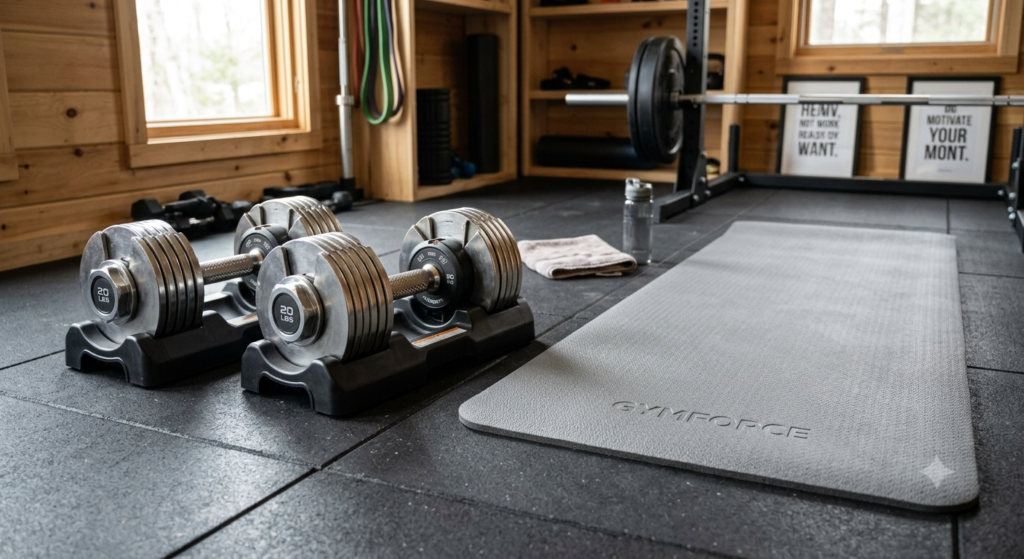
1. Adjustable Dumbbells


If you can only buy one thing for your home gym, make it a pair of adjustable dumbbells. Entry level adjustable sets, the kind that top out around 25 to 50 pounds per hand, are commonly available under $200 and replace what would otherwise be a small rack of fixed weight dumbbells. That matters a lot if you live somewhere without a garage or basement to spare.

Modern adjustable dumbbells have come a long way from the clunky screw collar designs of a decade ago. Many current models use a dial or pin selection system that lets you change weight in seconds, which keeps your workout moving instead of stalling out mid set while you fiddle with plates.

Good for: chest presses, rows, shoulder presses, goblet squats, lunges, and dozens of other strength movements.

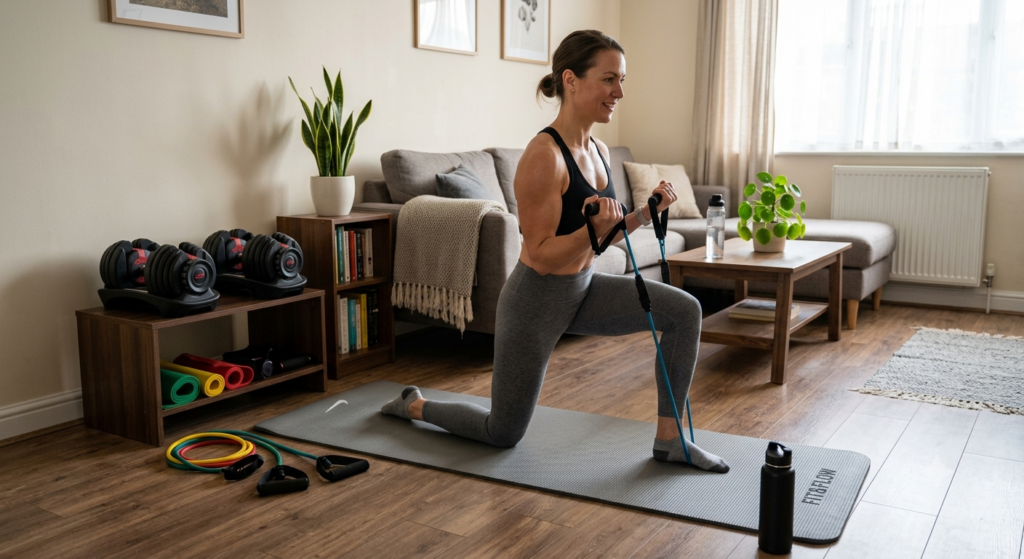
2. Resistance Bands Set


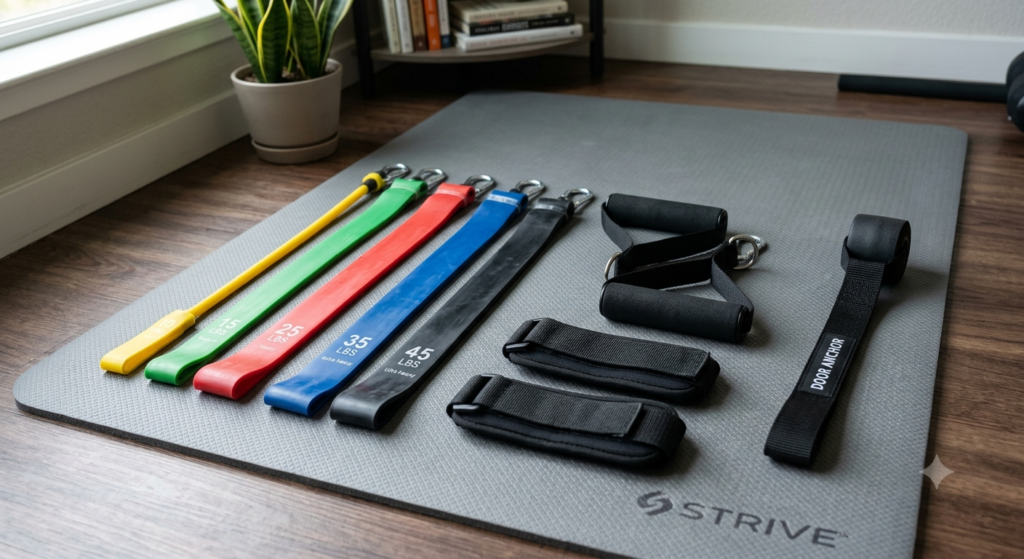
Resistance bands are one of the most underrated pieces of home gym equipment, and they routinely cost well under $50 for a full set with handles, ankle straps, and a door anchor. Unlike a fixed weight, bands provide variable resistance, meaning the tension increases the further you stretch them. Some people find this feels gentler on the joints compared to free weights, though as with any training tool, form and appropriate progression still matter most.

A quality band set typically includes several resistance levels, from light to heavy, so you can adjust the intensity as you get stronger. They also pack down small enough to toss in a suitcase, which makes them a favorite for anyone who travels often but still wants to keep up a routine.

Good for: banded squats, rows, lateral walks, shoulder work, and mobility or rehab focused movement patterns.

3. Kettlebells


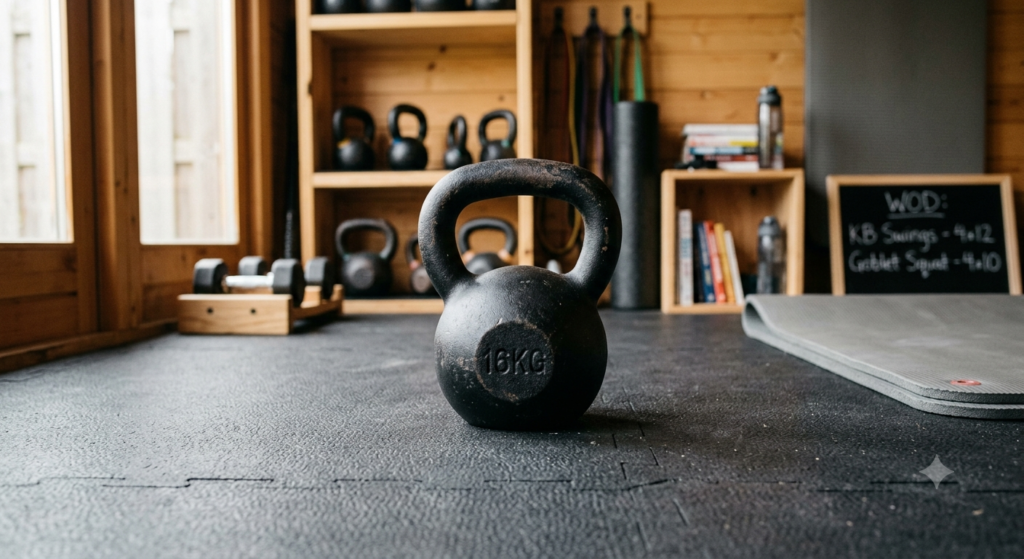
A single kettlebell in the 15 to 35 pound range can cost anywhere from $30 to $80 depending on the weight and brand, which leaves plenty of room in a $200 budget to grab two different weights. Kettlebells shine for full body, functional movements like swings, goblet squats, and Turkish get ups, and they take up almost no floor space compared to a barbell setup.

Because the weight is offset from the handle, kettlebell training also tends to challenge grip strength and core stability more than a standard dumbbell of the same weight, which some trainers consider a nice bonus for functional fitness.

Good for: swings, cleans, goblet squats, presses, and conditioning circuits.

4. Adjustable Weight Bench


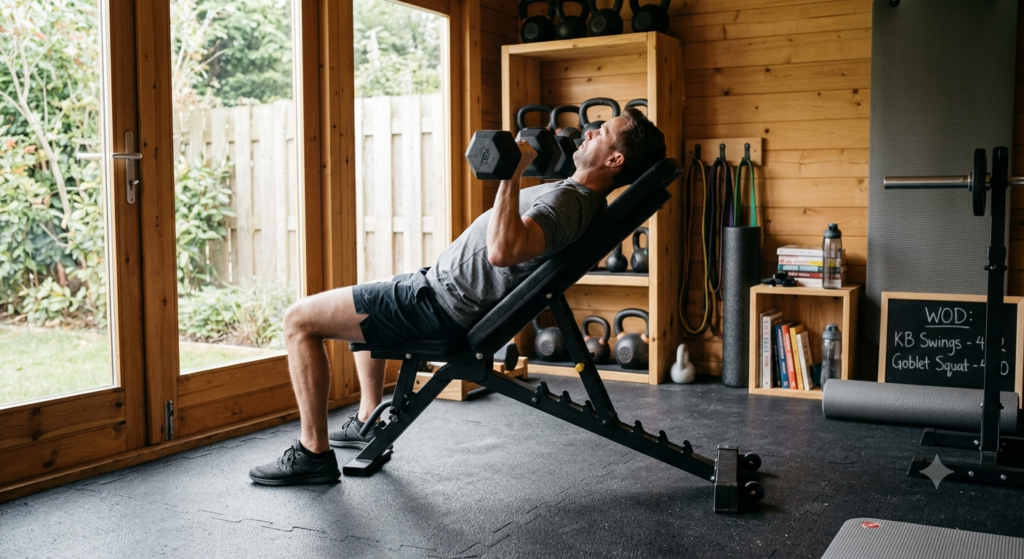
A flat or adjustable bench opens up a huge range of exercises that aren’t possible standing on the floor, from incline presses to step ups and seated shoulder work. Entry level flat benches can be found well under $100, while adjustable models with incline and decline settings generally land in the $120 to $200 range depending on weight capacity and build quality.

Look for a bench with a solid steel frame and a weight capacity that comfortably exceeds your body weight plus whatever you’re lifting, since this is one area where cutting corners on construction quality isn’t worth the savings.

Good for: bench press, incline dumbbell press, step ups, Bulgarian split squats, and seated core work.

5. Pull-Up Bar


A doorway mounted pull up bar is one of the best value additions you can make to a home gym, often priced between $20 and $60. It requires no permanent installation in most cases and gives you access to pull ups, chin ups, hanging leg raises, and even a few core exercises using just your body weight.

For anyone chasing upper body strength or working toward their first unassisted pull up, this is arguably one of the highest return on investment purchases on this entire list.

Good for: pull ups, chin ups, hanging knee raises, and passive shoulder stretching.

6. Jump Rope

It’s easy to overlook, but a good quality jump rope delivers a serious cardio workout for less than $30. Weighted or speed rope versions are common and let you dial in the training style you want, whether that’s steady state cardio or fast interval work.

Good for: cardio conditioning, coordination, and warm ups before strength sessions.

7. Suspension Trainer


Suspension trainers, the strap based systems that anchor to a door or beam, typically cost between $60 and $150. They use your own body weight as resistance and let you adjust the difficulty of nearly every movement just by changing your body angle. This makes them a strong option for people at very different fitness levels sharing the same equipment, such as a household with both a beginner and a more advanced lifter.

Good for: rows, presses, planks, lunges, and total body stability work.

8. Ab Wheel and Core Sliders

These two tools combined rarely cost more than $30 to $40 and target core strength in a way that’s genuinely different from crunches or planks. An ab wheel builds anti extension core strength, while sliders work well for mountain climbers, pikes, and lateral lunges on hard flooring.

Good for: core stability, anti rotation strength, and low impact conditioning.

9. Foam Roller

Not exactly a training tool, but a foam roller under $30 rounds out a home gym nicely by supporting recovery between sessions. Many people use foam rolling as part of a warm up or cool down routine, and some research suggests it may help with short term muscle soreness and mobility, though results vary from person to person.

10. Yoga Mat

A durable, non slip mat in the $25 to $50 range protects your floor, your joints, and gives you a defined workout space even in a shared room. It’s a small purchase, but it’s one of those items that gets used in almost every single session, whether for stretching, core work, or floor based strength exercises.

Sample Home Gym Bundles Under $200

Rather than buying one expensive piece of equipment, many budget conscious shoppers get better results by combining several affordable pieces. Here are three sample combinations that stay within a $200 budget while covering different training goals.

Goal Suggested Combination Approximate Total Cost
Strength focused Kettlebell (one weight) + resistance bands + pull-up bar + yoga mat $150 to $195
Full body versatility Adjustable dumbbells (lower weight range) + yoga mat + jump rope $160 to $200
Small apartment / travel friendly Resistance bands + suspension trainer + ab wheel + foam roller $130 to $175

Prices vary by brand, retailer, and ongoing sales, so treat these as general planning ranges rather than fixed numbers. It’s worth checking current listings before you buy, since fitness equipment pricing shifts fairly often with seasonal promotions.

How to Structure a Workout With Budget Equipment

Having the right gear is only half the equation. Here’s a simple weekly structure that works well with the equipment listed above, especially the strength focused bundle:

  • Day 1 – Upper body: Pull-ups or banded rows, dumbbell or kettlebell press, banded shoulder raises.
  • Day 2 – Lower body: Goblet squats, banded lateral walks, step ups on the bench, glute bridges.
  • Day 3 – Full body conditioning: Kettlebell swings, jump rope intervals, core work with the ab wheel or sliders.
  • Day 4 – Rest or mobility: Foam rolling, light stretching, walking.

This kind of rotation hits every major muscle group across the week without requiring a single piece of equipment beyond what fits in a closet or under a bed.

Common Mistakes to Avoid When Buying Budget Equipment

  • Buying too much too soon: Start with two or three versatile pieces and add more once you know what you’ll actually use consistently.
  • Ignoring weight capacity ratings: A bench or rack rated below your combined body weight and lifted load is a safety risk, not just an inconvenience.
  • Skipping the return window: Test equipment within the return period so you can send it back if the build quality feels off.
  • Overlooking flooring protection: A cheap mat or set of interlocking floor tiles can prevent damage to hardwood or laminate floors from dropped weights.

Frequently Asked Questions

What is the best home gym equipment under $200 for beginners?

For most beginners, a combination of resistance bands, a single kettlebell, and a yoga mat offers the best starting point. It’s affordable, versatile, and covers strength, mobility, and basic conditioning without requiring much space.

Can you build a full home gym for under $200?

Yes, a basic but genuinely effective home gym can be built for under $200 by combining a few multi purpose items such as resistance bands, an adjustable dumbbell set at the lower weight range, a pull-up bar, and a mat. It won’t replace a fully equipped commercial gym, but it covers strength training, cardio, and core work.

Are adjustable dumbbells worth it compared to a full set of fixed weights?

Adjustable dumbbells are generally worth it for anyone with limited space, such as an apartment or small spare room, since they replace multiple pairs of fixed weight dumbbells in a fraction of the footprint. A full fixed weight rack may still be preferable for those with dedicated gym space who want to switch weights quickly between sets.

What home gym equipment gives the best value for the money?

Resistance bands and pull-up bars are consistently among the highest value items because of their low cost relative to the number of exercises they support. Kettlebells and adjustable dumbbells are close behind, offering strength training versatility at a moderate price point.

Do I need a weight bench to have an effective home gym?

A bench is helpful but not strictly necessary starting out. Many effective strength routines can be built using standing and floor based exercises with dumbbells, kettlebells, or bands. A bench becomes more valuable as your routine grows and you want to add exercises like bench presses or step ups.

Is home workout equipment as effective as a commercial gym?

Research and general fitness guidance suggest that consistency and progressive overload, gradually increasing the challenge of your workouts over time, matter more than the specific equipment used. A well planned home routine with basic equipment can support meaningful strength and fitness gains for most people, though those with advanced or highly specific training goals may eventually benefit from additional equipment or professional guidance.

Final Thoughts

You don’t need a room full of machines to get a solid workout in at home. A handful of well chosen pieces, resistance bands, a kettlebell or adjustable dumbbells, a pull-up bar, and a decent mat, can cover strength, cardio, and mobility for well under $200. The key is picking equipment that matches your space, your goals, and the way you actually like to train, rather than chasing every trending gadget you see online.

Start small, stay consistent, and add equipment only when you’ve outgrown what you have. That approach tends to build a home gym that actually gets used for years, instead of one that turns into an expensive coat rack after a few weeks.

This article is for general informational purposes and does not constitute medical or fitness advice. Consult a qualified healthcare provider or certified trainer before starting a new exercise program, particularly if you have an existing health condition or injury.

Registration complete !

Show

Reset your password

Please enter your email address. You will receive a link to create a new password.

Check your e-mail for the confirmation link.

Close